
Listed below is our incredible slate of nominees for this years (2026) election. The positions that are available to be voted on are: At-Large Board Member, Graduate Student Representative, Secretary and Treasurer. Please (1) read the Candidates’ statements below; (2) ensure that your SDS membership is current (votes will be verified against emails associated with active SDS memberships); and (3) cast an online member ballot before 11:59pm EDT, July 13, 2026.
The ballot is live as of June 22, 2026. VOTE here. You can vote for as many as five (5) At-Large members, and two (2) Graduate Student Representatives to join the SDS Board. For executive Board Officer roles, please vote for only one (1) candidate for Secretary and one (1) candidate for Treasurer. If you require any assistance, please email admin@disstudies.org
Nominee for Treasurer
Amanda Christy (Apgar)
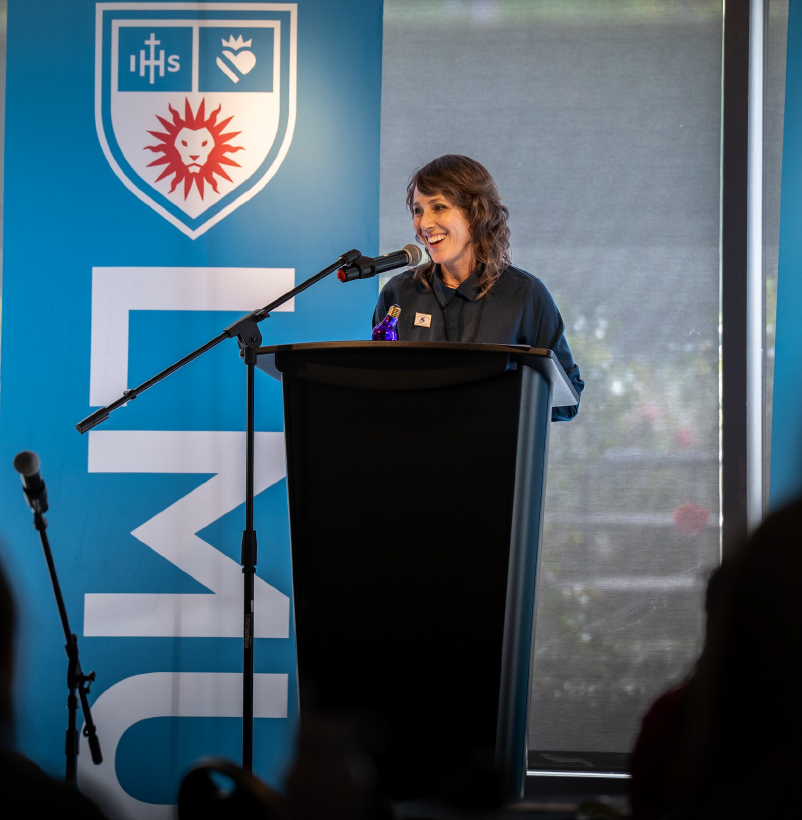
I have served as the Secretary for the Society for Disability Studies since 2023 and as Interim Treasurer since November 2025. I have researched and taught in critical disability studies since 2011 and publish in critical disability studies and feminist disability studies. At my institution I direct the minor in disability studies and have held fellowships with the Center for Faculty development with the goal of increasing disability and access literacy on campus. I teach numerous workshops annually on access, UDL, and trauma informed pedagogy. I am currently studying for a Juris Doctorate with a focus on disability law. My personal and professional lives are entirely enmeshed in disability, access, caregiving, and related policy, activism, and research. I would like to continue in my role as Treasurer to maintain what has been put in place recently, with the promise of a more sustainable SDS within our grasp.
Expand to read the remainder of Amanda’s statement
As Secretary and Treasurer of the SDS Board I have and continue to gain experience with nonprofit leadership, including especially fundraising and financial stewardship, and internal organization and management. I have dialed in and streamlined a number of processes. I have undertaken a revision of the SDS policies and procedures handbook and eliminated a number of redundancies in existing processes. I have eliminated a number of unnecessary expenditures to save the Board over $2,500 annually. I currently manage all Board finances including banking, membership donations and Patreon reporting, all accounting, nonprofit legal and financial reporting, invoice processing, and all related communications. As Secretary, I manage agenda setting for Board meetings, minutes, weekly communications with Board, synthesizing committee and Executive communications, calendaring, and working with all committees on the distribution of information to the Board and membership. In addition, I have organized and run a national conference on disability studies at my institution for two consecutive years, managing all aspects of the conference from promotion, hiring and managing access vendors, and day-of operations, including all budgeting and expenses (<$32k).
I understand my role on the Board as in service of the SDS membership, and as a member of the Exec as executor of the decisions of the Board through committee work and shared governance. I have committed a great deal of time and energy over the past three years to sustaining the SDS and honoring our duty to meeting the needs and advancing the vision of members of the Society.
Nominees for Secretary
Choose One:
Fotini Mastroianni
My book titled “Refused and Retaliated: Disability, Workplace Rights and Institutional Failure in Greece,” has just been officially accepted for publication by Lived Places Publishing (New York/UK) for their Disability Studies Collection. This forthcoming book directly aligns with the perspectives that I hope to bring to the SDS Board.
My experience in nonprofit and academic organizational leadership spans multiple contexts. I have served as an active member of the Panhellenic Association of Public Sector Doctoral Researchers (PASYD), contributing to collective publications and policy advocacy for doctoral researchers in the Greek public sector. I have participated in the organization of academic conferences and have presented at international interdisciplinary events across Greece and Europe.
Expand to read the remainder of Fotini’s statement
As a researcher and blogger with over 550,000 page views, I have engaged in public knowledge dissemination that bridges academic and non-specialist audiences — a form of civic engagement central to nonprofit missions. My work on disability, chronic illness, and workplace discrimination, published in a collective volume on stereotypes and social inclusion, reflects my commitment to equity-oriented scholarship and advocacy.
I bring to the Board a combination of academic expertise in labour rights, gender equality, and social policy, alongside direct personal experience as a person with a disability and spouse of a person with a disability.
I hope to bring to the SDS Board a Southern European and international perspective that is currently underrepresented in disability studies scholarship and advocacy. Much of the existing literature and policy discourse on disability and work is shaped by Northern European and North American contexts — yet the experiences of people with disabilities in austerity-affected economies like Greece are qualitatively different and deserve dedicated attention. Specifically, I hope to contribute to expanding SDS’s engagement with the intersection of disability, precarious labour, and gender — particularly for women with disabilities navigating hostile institutional environments. My research on labour rights, social reproduction, and feminist political economy, combined with my personal experience as a person with a disability working in the Greek public sector, positions me to advocate meaningfully for these communities.
I also hope to amplify the voices of disabled caregivers — those who simultaneously navigate disability and the responsibilities of caring for a disabled family member — a group whose intersecting vulnerabilities remain largely invisible in both disability studies scholarship and institutional policy. Finally, I am committed to strengthening SDS’s international outreach, particularly toward Southern and Eastern European academic communities where disability rights frameworks remain unevenly implemented and under-researched.
ShayLee Hunter (she/her)

My experience with Critical Disability Studies, Disability Activism, and Disability Justice comes from both lived experience and my professional and volunteer work within the disability and chronic illness community. I have a background in advocacy and nonprofit leadership, focusing on increasing visibility for individuals with invisible and complex medical conditions and challenging the barriers they face in healthcare, education, and society.
Expand to read the remainder of ShayLee’s statement
Through my work with organizations such as Girls With Guts and Mascot Miracles Foundation, I have supported outreach efforts, storytelling campaigns, and community engagement initiatives that center on disabled voices and lived experiences. I also serve in ambassador and mentorship roles that focus on peer support, empowerment, and creating inclusive spaces where individuals feel seen and valued.
In addition, my advocacy work in child welfare and community programs has strengthened my understanding of intersectionality, access to care, and the importance of representation in systems that often overlook disabled individuals. I am especially passionate about shifting narratives around disability from limitation to lived experience, autonomy, and justice.
Overall, my work is rooted in amplifying disabled voices, building community connection, and supporting efforts that align with Disability Justice principles of inclusion, equity, and collective care.
I have extensive experience in nonprofit leadership, engagement, and fundraising through both professional roles and volunteer involvement. In my work within child advocacy and community nonprofits, I have led and supported fundraising events, coordinated donor outreach, and built partnerships with local businesses, schools, and community organizations to secure sponsorships and in-kind donations.
I have been actively involved in event planning and execution, including community drives, awareness events, and large-scale fundraisers, where I supported logistics, marketing, and donor engagement. I have contributed to securing donations for silent auctions, managing outreach campaigns, and helping ensure successful event outcomes through strong organization and collaboration.
In addition, I serve in outreach and ambassador roles, supporting engagement initiatives, storytelling, and community connection efforts that help grow awareness and participation. I am experienced in working with diverse stakeholders, including volunteers, board members, and community partners, to advance organizational missions and strengthen support networks.
Overall, my experience has focused on building relationships, supporting mission-driven fundraising efforts, and contributing to collaborative leadership environments that prioritize impact, accessibility, and community care.
On the SDS Board, I hope to help strengthen connection, accessibility, and visibility within the disability community while ensuring lived experiences remain at the center of decision-making. I want to support initiatives that increase engagement among members, expand outreach to underrepresented voices, and create more opportunities for meaningful participation and leadership development.
I am especially passionate about building programs and spaces that feel inclusive, supportive, and action-driven—where members feel empowered not only to share their experiences but also to help shape the direction of the organization. I also hope to contribute my experience in nonprofit engagement, storytelling, and community outreach to help grow awareness and strengthen partnerships that support the mission.
Ultimately, I want to help ensure the SDS Board continues to be a space where disability justice, collaboration, and community care are actively practiced, not just discussed.
Ayunita Xiao Wei
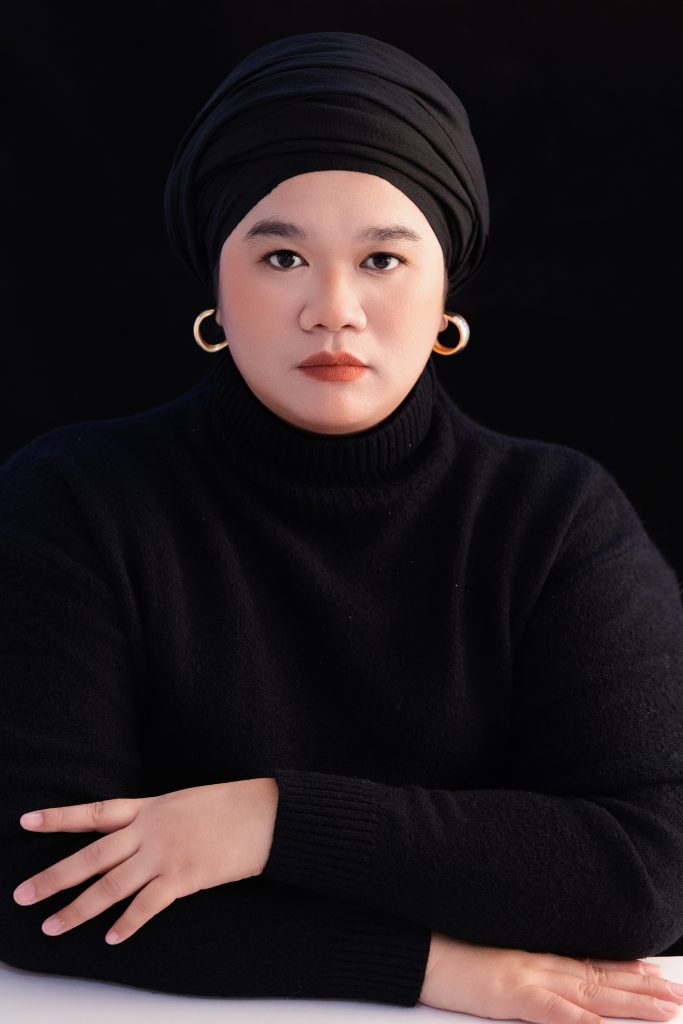
My engagement with Critical Disability Studies and the broader disability community is deeply informed by my lived experience as a bipolar individual. Rather than approaching disability solely as a medical condition, I understand it as a complex, embodied, and socio-political reality—one that shapes how I navigate time, productivity, relationships, and creative expression. This perspective aligns closely with Critical Disability Studies in its challenge to normative expectations of stability, linearity, and “functionality.” Living with bipolar has directly influenced my artistic and cultural practice. Through poetry, digital visual art, I explore cycles of intensity, vulnerability, fragmentation, and recovery. My work often reflects the textures of manic and depressive states—not as spectacle, but as intimate knowledge—opening space for more honest and less stigmatized representations of psychosocial disability. In this way, my practice contributes to disability activism by shifting narratives from silence and marginalization toward visibility and agency.
Expand to read the remainder of Ayunita’s statement
My commitment to Disability Justice is expressed through my emphasis on care, interdependence, and inclusivity in the spaces she creates. I engage communities through collaborative projects, discussions, and documentation practices that center marginalized experiences, including those shaped by mental health. My leadership emerges not through formal titles, but through facilitation, storytelling, and the cultivation of safe, reflective environments where others can share their own lived realities. By integrating my lived experience with artistic inquiry, my art positions as both a critical tool and a caring practice—one that resists stigma, fosters empathy, and expands public understanding of disability as diverse, relational, and deeply human.
I bring a strong track record of leadership, engagement, and program development across nonprofit, cultural, and community-based initiatives. My experience spans organizational leadership, committee roles, creative production, and youth-focused programming, demonstrating a consistent commitment to social impact and public engagement. Currently, I serve as Secretary of the Literature Committee at the Jakarta Arts Council where I contribute to program coordination, stakeholder engagement, and the development of literary initiatives within one of Indonesia’s key cultural institutions. Previously, I held a significant leadership role as Director of Knowledge at Rumah Seni dan Budaya Feminis (2020–2024), where I was responsible for shaping learning frameworks, facilitating discussions, and producing knowledge resources that support feminist and community-based movements.
I have also been actively involved in regional and international nonprofit work. As a Producer with ASEAN SOGIE Caucus, I contributed to program and content production that amplifies marginalized voices across Southeast Asia. My role as a module writer for Plan Indonesia’s Girls Leadership Academy further highlights her contribution to capacity-building initiatives for young women .My earlier work as Coordinator of the Youth Division at Perkumpulan Pamflet Generasi (2017–2020) reflects hands-on leadership in community engagement, including managing youth programs, campaigns, and publications. I also initiated and directed “Poetry for Integrity,” a public-facing event in collaboration with Transparency International Indonesia, demonstrating her ability to lead creative advocacy initiatives and mobilize audiences around social issues.
In addition to formal roles, my long-standing involvement as a volunteer, researcher, and facilitator underscores my commitment to grassroots engagement and collaborative work. While my fundraising experience is primarily embedded within program development and partnership-based projects, my work consistently supports resource mobilization through creative programming, cross-sector collaboration, and community-driven initiatives. Overall, my leadership is defined by my ability to bridge art, knowledge production, and activism—creating meaningful platforms for dialogue, participation, and collective growth within the nonprofit and cultural sectors.
On the SDS Board, I hope to contribute to a more grounded, accessible, and globally attentive practice of Critical Disability Studies—one that does not remain confined to academic discourse, but is deeply connected to lived realities, particularly in the Global South. Coming from Indonesia, my concerns are shaped by the gaps I witness between theory and everyday experience: limited access to mental health support, persistent stigma around psychosocial disabilities, and the marginalization of disabled voices within cultural and public spaces. I am especially committed to expanding how disability is understood within SDS by bringing in perspectives from interdisciplinary art, community-based knowledge, and lived experience. I want to advocate for approaches that recognize care, interdependence, and cultural context, not only as topics of study, but as practices embedded in how SDS operates as an organization.
Additionally, I hope to support more inclusive and accessible forms of engagement within the SDS community, including for members who may face structural, geographic, or linguistic barriers to participation. This includes exploring alternative formats for knowledge-sharing, fostering cross-regional dialogue, and strengthening connections between scholars, artists, and activists. Ultimately, I see my role as helping SDS grow into a more porous and responsive space, one that listens, adapts, and actively creates room for voices and experiences that have historically been overlooked or underrepresented.
Notwithstanding, as Secretary of SDS, I hope to contribute to a culture of accessibility, transparency, and collective care within the organization. My experience across arts, research, community organizing, and nonprofit work has taught me the importance of thoughtful documentation, clear communication, and institutional memory in sustaining movements and organizations over time. Coming from Indonesia and working across cultural, academic, and grassroots spaces, I am particularly concerned with how disability knowledge is produced, shared, and made accessible across different regions, languages, and communities. I believe SDS has a unique opportunity to strengthen connections between scholars, artists, activists, and community members whose experiences may not always be represented within dominant disability discourses. As a person living with bipolar disorder, I also bring a lived understanding of the importance of creating organizational cultures that value care, flexibility, and interdependence. I am interested in supporting practices that make participation more accessible for people with psychosocial, invisible, and fluctuating disabilities, whose contributions are often overlooked because of conventional expectations around productivity and engagement.
If elected Secretary, I would work to ensure that organizational processes, records, and communications are not only efficient but also accessible and inclusive. I hope to help strengthen SDS’s institutional continuity while supporting meaningful engagement among members across diverse geographic, cultural, and disciplinary contexts. Ultimately, I see the role of Secretary as more than an administrative position. It is an opportunity to help steward the collective knowledge, relationships, and values that sustain SDS, while ensuring that accessibility, disability justice, and global perspectives remain central to the organization’s ongoing work.
Phillipa Vincent-Connolly
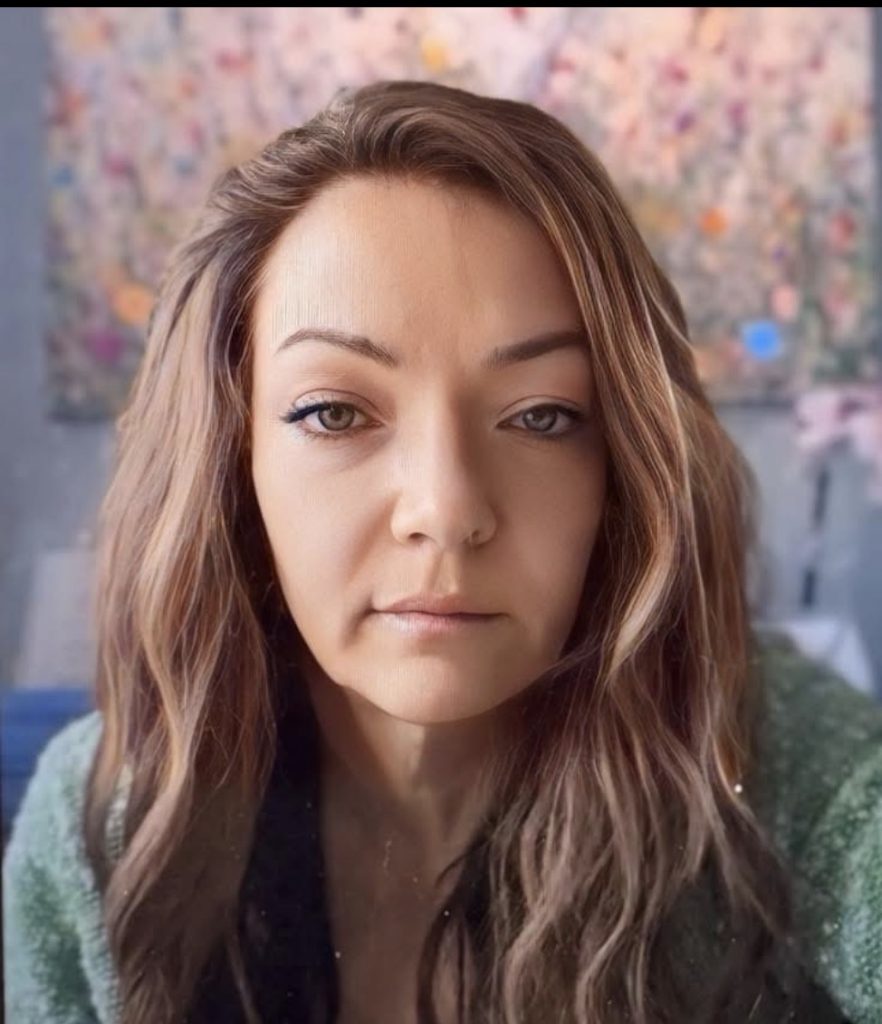
Phillipa Vincent-Connolly is an historian, writer, and published author of historical fiction and nonfiction. She is a consultant on many exciting projects across a broad spectrum with a special interest in disability and is becoming the ‘go-to’ broadcaster on this subject, especially recently with the publication of her book, ‘Disability and the Tudors.’ Published by Pen and Sword history imprint, currently, this is the first book in a series on disabilities in specific eras and benefits from Phillipa’s own experience of living with Cerebral Palsy.
Expand to read the remainder of Philipa’s statement
She achieved her degree in History and Humanities in 2011 and her PGCE, QTS, in 2014, and NQT 2019, in teaching (secondary), and part of her MA Graduate Diploma in History in 2020, and is currently specialising in disability history. She has spoken at the National Archives and the British library to great acclaim. Her experience in teaching makes her an authoritative and engaging public speaker. She is a Fellow of the Royal Historical Society.
Phillipa has written for History Today,Blitzed Magazine, has been interviewed regularly for BBC radio, and has appeared in C5 documentaries, and mini-TV documentaries.
Among her many interests, she has a deep and abiding love for all things historical, archives, artefacts, architecture, fashion, and royalty. Phillipa is also a keen activist, giving a contemporary voice to disabled people of the past, and those who currently feel disenfranchised. Her own disability has allowed her to identify and empathise with those who have not been heard and she is passionate about equality for the disabled. She lives in Poole, Dorset, but is not solely UK centric, as she has a broad spectrum of knowledge and research on which to draw.
A rising star in historical fiction too, with her ‘Timeless Falcon’ historical fiction series of books, Phillipa has both the research and writing abilities to adapt to any project and is the future of the past.
I am director of a non profit Aims for Life-Coaching for Disabled people. I have also spoken at Teach Meet events and conferences on disability history and to the NHS on intellectual disability history.
I would like to receive potential sponsorship to finish my Masters in disability history, and also start my PhD on disability history, as well as support colleagues on disability history collaborations and disability issues in general.
Laura Hollaway (She/Her)
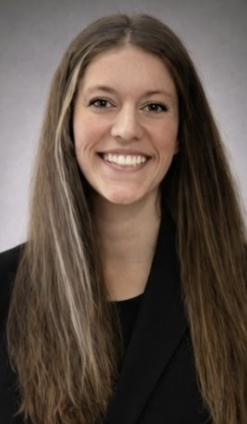
My research and publications emphasize dignity, quality of life, intersectionality, and social inclusion, including recent work on Inclusive Academia: Intersectionality of Disability, Gender and Caste.
My experience in nonprofit leadership and community engagement has primarily been connected to education, disability advocacy, autism support, and professional collaboration within school and university communities. Through my doctoral studies, faculty involvement, and work within educational settings, I have participated in collaborative committees, professional learning initiatives, and outreach efforts focused on improving supports and outcomes for students with disabilities and their families.
Expand to read the remainder of Laura’s statement
I have experience coordinating with educators, administrators, and community stakeholders to support inclusive practices, research participation, and educational programming. This has included involvement in professional development efforts, educational seminars, and community engagement activities centered on autism, neurodiversity, and evidence-based practices. My work has also required strong collaboration, communication, and organizational skills when working with multidisciplinary teams and supporting research and program initiatives.
In addition, my role within higher education has allowed me to contribute to mentoring, advocacy, and professional engagement opportunities that support future educators and professionals entering the field. I value service-oriented leadership and believe strongly in building collaborative relationships that strengthen community access, inclusion, and support for individuals with disabilities.
If elected to the SDS Board, I hope to contribute a perspective grounded in education, autism advocacy, neurodiversity-affirming practices, and community collaboration. One of my primary goals would be to help strengthen connections between disability scholarship, educational practice, and the lived experiences of disabled individuals and families. I believe there is tremendous value in creating spaces where educators, researchers, advocates, students, and community members can work together to promote accessibility, inclusion, and meaningful systemic change.
I would also like to support efforts that increase engagement and accessibility for emerging scholars, students, and professionals entering disability-related fields, particularly those whose work intersects with education and neurodiversity. As someone actively involved in both higher education and public education settings, I hope to help bridge conversations between academic research and real-world implementation in schools and communities.
Additionally, I want to continue learning from and collaborating with individuals across the broader disability community while advocating for approaches that center dignity, autonomy, representation, and equity. I value interdisciplinary perspectives and believe that strong leadership comes from listening, collaboration, and a commitment to ongoing growth and reflection.
Morgan Gray (they/them)
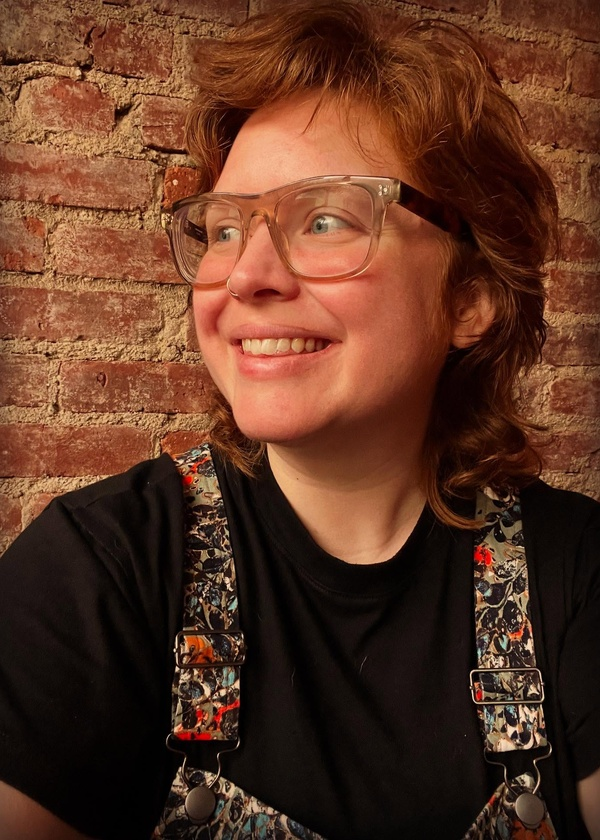
I am a disabled and chronically ill doctoral student researching at the intersections of disability justice, technology, and health information behavior. As a doctoral student at the University of Michigan, I am a member of the Health Justice Informatics Lab. My research explores how emerging technologies impact the ways disabled and chronically ill individuals navigate health information, and how that impacts our health outcomes. I am passionate about disability advocacy and disability justice – my earlier graduate level research specifically focused on meeting information needs of endometriosis patients, and advocacy for those groups. I have previously moderated social media illness support groups, and guided and directed friends and acquaintances through illness transitions. I am an outspoken advocate for health, information, and media literacy.
Expand to read the remainder of Morgan’s statement
I have worked with nonprofits in the past, including music camps and instrument donation charities. As a former stand-up comedian, I ran a small production company and donated proceeds from each of our shows to charities. I was heavily involved in event planning, promotion, and advertising, including securing venues, talent, and organizing payment.
As a member of the SDS Board, I want to apply my experience in academia, industry, and as a non-profit volunteer to help further the mission and goals of the Society for Disability Studies. I have experience as an interdisciplinary scholar, as I completed my M.S in Library and Information Science in 2021 at the University of Illinois, Urbana-Champaign in 2021. I am continuing my studies at the University of Michigan School of Information, focusing on the intersection of disability, health information, and technology. My work as an interdisciplinary scholar has honed my skills working with academics from all corners of academia. As a member of the board, I would look forward to collaboration, in the spirit of cross-movement and cross-disability solidarity.
My work experience would also be helpful. I took time between undergrad and grad school to work, and worked in insurance, logistics, and corporate libraries. This may seem unrelated, but working in these industries made me an excellent communicator and collaborater. The organizational skills I rely on to succeed in academia were forged in my early professional career. I have led meetings, created agendas, and run projects from start to finish as a one-person department. This makes me very well suited to serve as either a graduate representative or as secretary. As a trained librarian, I am exceptional at organization and knowledge management. These skills are essential for organizing meetings, and taking meticulous notes.
I also have experience planning, running, and volunteering at events. Prior to 2020, I produced and booked stand-up comedy shows and donated portions of their proceeds to different charities. I also assisted with event planning for my music fraternity, Sigma Alpha Iota, in undergrad, and served as the Editor on their executive board.
My academic, professional, and volunteer experience translates well to the responsibilities. Ultimately, as a member of the SDS board, I hope to translate this experience to furthering the mission of SDS – amplifying disability scholarship and activism through assisting with the day-to-day operations. I am committed to the principles of disability justice, and want to create a better world for disabled people.
Salman Khan
[No Photo]
I am currently pursuing my PhD at the Faculty of Law, University of Delhi, where my research focuses on the reproductive rights of women with disabilities from a socio-legal perspective. My academic work engages with questions of autonomy, legal capacity, dignity, and disability justice within international and constitutional law.
Expand to read the remainder of Salman’s statement
As a wheelchair user and first-generation scholar, my engagement with disability studies is shaped both by academic inquiry and lived experience. I come from a modest socio-economic background and have largely continued my education through scholarships and community support. These experiences have deeply informed my understanding of structural exclusion, accessibility, and social justice.
Alongside research, I have remained connected with disability advocacy and community engagement through discussions on accessibility, inclusion, and rights-based approaches toward disability. I am particularly interested in strengthening Global South perspectives within disability discourse and contributing toward more inclusive and intersectional conversations in disability studies.
My experience with nonprofit and community engagement has primarily emerged through academic support networks, disability advocacy spaces, and collaborations with community-based initiatives. Throughout my educational journey, I have remained connected with organizations and individuals working toward inclusion and accessibility for persons with disabilities.
I have participated in academic discussions, awareness initiatives, and research-based engagement concerning disability rights, accessibility, and socio-legal inclusion. As a research scholar, I have also developed experience in conference participation, academic coordination, collaborative work, and public engagement through legal and policy discussions.
While my experience in formal nonprofit administration and fundraising is still developing, I am committed to contributing actively through research, communication, collaboration, and disability-centered advocacy. I am eager to learn from experienced members of the Society for Disability Studies and contribute meaningfully to its academic and community initiatives.
If elected to the SDS Board, I hope to contribute toward strengthening intersectional and Global South perspectives within disability studies. Much of my research focuses on how disability intersects with gender, reproductive autonomy, legal capacity, and socio-economic marginalization, particularly in contexts that are often underrepresented in mainstream disability discourse.
I would also like to support conversations around accessibility, inclusion of disabled scholars from marginalized backgrounds, and greater engagement with students and early-career researchers. As someone whose academic journey has been shaped by lived experience, scholarship support, and community resilience, I believe disability studies should remain deeply connected to questions of dignity, participation, and social justice.
I hope to contribute to SDS as both a scholar and community-oriented participant committed to inclusive and critical disability discourse.
Hannah Brown (they/them)
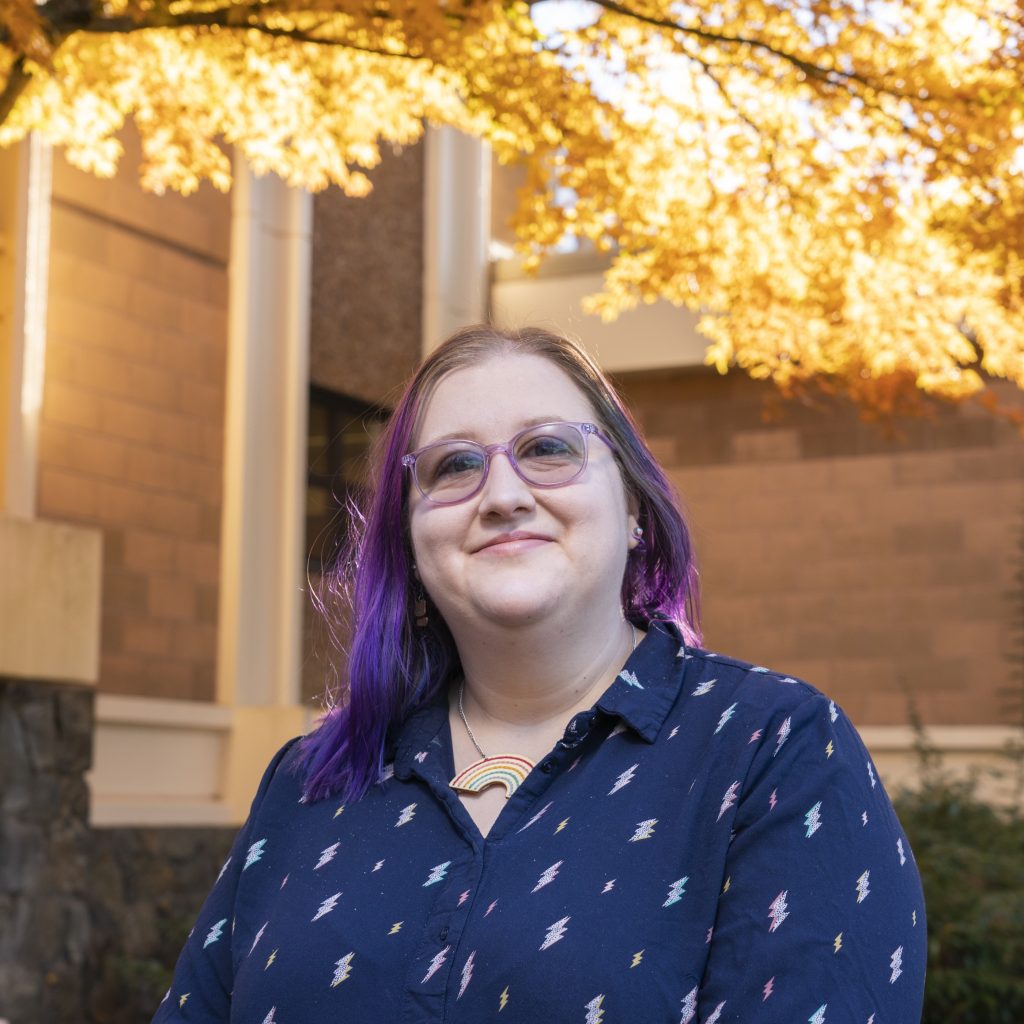
My engagement with both Critical Disability Studies and Disability Justice is grounded my lived experience as a disabled, neurodivergent scholar and advocate. I also bring my skills and experience in sustained leadership across my university campus, broader, and national disability communities.
I have held several leadership roles such as being the Operations Director (Chair) of the University of Victoria’s (UVic’s) Society for Students with a Disability since February 2024, a Peer Mentor for students with a disability, and Learning Strategist with the Centre for Accessible Learning. Also, I have held membership and been an advocate on several UVic Committees, such as the Senate and Accessibility Committee. From August 2023 to March 2026 I was a Job Coach for the National Educational Association for Disabled Students’ Pathways to Employment Program. In my roles I have worked to advance accessibility, collective care, and structural change.
Expand to read the remainder of Hannah’s statement
My disability activism centres community, intersectionality, and the removal of barriers to true inclusion. Through this I have delivered more than 30+ workshops and trainings on disability, neurodiversity, accessibility, and anti ableism. I have also served as a panelist on disability and human rights; and contributing to UVic’s institutional accessibility planning.
As a researcher, my work in disability justice, intersectionality, and social movements informs my approach to all the work I do. I bring both scholarly grounding and lived experience to conversations about access, representation, and inclusive knowledge production.
I bring extensive nonprofit leadership and governance experience across multiple committees, boards, and community organizations. My roles span financial stewardship, policy development, hiring, accessibility planning, and community engagement. Examples of this include being the Operations Director (Chair) of the UVic’s Society for Students with a Disability since February 2024 and being the Treasurer/Finance Representative of the UVic Pride Collective for over 2.5 years. I have also been a Steering Committee Member as part of UVic’s Accessibility Committee for over two years, on which governs and organises meetings of the general committee.
As well I this I have contributed to conference organising, community events, and public facing education through keynote talks, panel participation, event planning/organisation, and workshop organisation/facilitation. For example, I was part of organising the Society for Students with a Disability Autism Awareness Week in 2025 and Disability Symposium in 2023. These roles have strengthened my skills in collaborative governance, agenda setting, community engagement, and navigating complex institutional systems.
On the SDS Board, I hope to advance community rooted disability justice, strengthen the accessibility and sustainability of SDS programs, and contribute to a culture of collaborative, accountable leadership.
My priorities include:
– Strengthening pathways for emerging disabled scholars and youth leaders to flourish, particularly those who experience multiple marginalisation.
– Supporting editorial and knowledge mobilisation work that centres disabled voices, challenges academic gatekeeping, and uplifts community engaged scholarship.
– Building cross movement connections between disability justice, queer and trans liberation, migrant justice, and anti racist organizing, supporting intersectional work.
– Ensuring transparent, values aligned governance, drawing on my experience in financial stewardship, committee leadership, and policy development.
Ultimately, I hope to contribute to a culture that is reflective, relational, and grounded in the principles of disability justice, which centres care, interdependence, and collective liberation.
Nominees for At-Large Board Member
Choose up to five (5) out of 22.
Fotini Mastroianni
My book titled “Refused and Retaliated: Disability, Workplace Rights and Institutional Failure in Greece,” has just been officially accepted for publication by Lived Places Publishing (New York/UK) for their Disability Studies Collection. This forthcoming book directly aligns with the perspectives that I hope to bring to the SDS Board.
My experience in nonprofit and academic organizational leadership spans multiple contexts. I have served as an active member of the Panhellenic Association of Public Sector Doctoral Researchers (PASYD), contributing to collective publications and policy advocacy for doctoral researchers in the Greek public sector. I have participated in the organization of academic conferences and have presented at international interdisciplinary events across Greece and Europe.
Expand to read the remainder of Fotini’s statement
As a researcher and blogger with over 550,000 page views, I have engaged in public knowledge dissemination that bridges academic and non-specialist audiences — a form of civic engagement central to nonprofit missions. My work on disability, chronic illness, and workplace discrimination, published in a collective volume on stereotypes and social inclusion, reflects my commitment to equity-oriented scholarship and advocacy.
I bring to the Board a combination of academic expertise in labour rights, gender equality, and social policy, alongside direct personal experience as a person with a disability and spouse of a person with a disability.
I hope to bring to the SDS Board a Southern European and international perspective that is currently underrepresented in disability studies scholarship and advocacy. Much of the existing literature and policy discourse on disability and work is shaped by Northern European and North American contexts — yet the experiences of people with disabilities in austerity-affected economies like Greece are qualitatively different and deserve dedicated attention. Specifically, I hope to contribute to expanding SDS’s engagement with the intersection of disability, precarious labour, and gender — particularly for women with disabilities navigating hostile institutional environments. My research on labour rights, social reproduction, and feminist political economy, combined with my personal experience as a person with a disability working in the Greek public sector, positions me to advocate meaningfully for these communities.
I also hope to amplify the voices of disabled caregivers — those who simultaneously navigate disability and the responsibilities of caring for a disabled family member — a group whose intersecting vulnerabilities remain largely invisible in both disability studies scholarship and institutional policy. Finally, I am committed to strengthening SDS’s international outreach, particularly toward Southern and Eastern European academic communities where disability rights frameworks remain unevenly implemented and under-researched.
Ayunita Xiao Wei
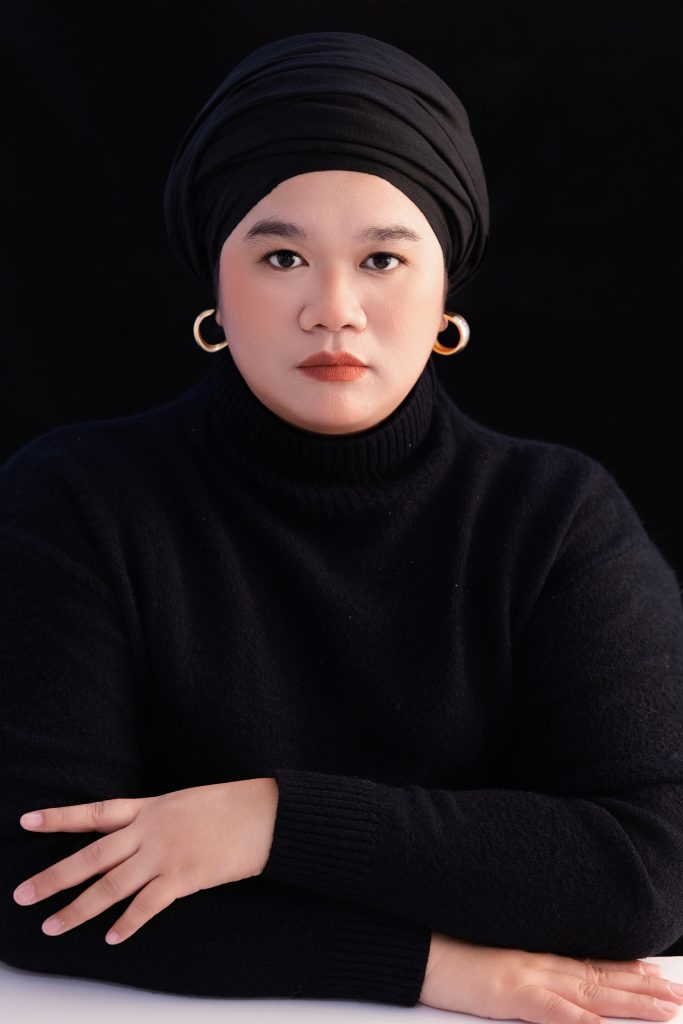
My engagement with Critical Disability Studies and the broader disability community is deeply informed by my lived experience as a bipolar individual. Rather than approaching disability solely as a medical condition, I understand it as a complex, embodied, and socio-political reality—one that shapes how I navigate time, productivity, relationships, and creative expression. This perspective aligns closely with Critical Disability Studies in its challenge to normative expectations of stability, linearity, and “functionality.” Living with bipolar has directly influenced my artistic and cultural practice. Through poetry, digital visual art, I explore cycles of intensity, vulnerability, fragmentation, and recovery. My work often reflects the textures of manic and depressive states—not as spectacle, but as intimate knowledge—opening space for more honest and less stigmatized representations of psychosocial disability. In this way, my practice contributes to disability activism by shifting narratives from silence and marginalization toward visibility and agency.
Expand to read the remainder of Ayunita’s statement
My commitment to Disability Justice is expressed through my emphasis on care, interdependence, and inclusivity in the spaces she creates. I engage communities through collaborative projects, discussions, and documentation practices that center marginalized experiences, including those shaped by mental health. My leadership emerges not through formal titles, but through facilitation, storytelling, and the cultivation of safe, reflective environments where others can share their own lived realities. By integrating my lived experience with artistic inquiry, my art positions as both a critical tool and a caring practice—one that resists stigma, fosters empathy, and expands public understanding of disability as diverse, relational, and deeply human.
I bring a strong track record of leadership, engagement, and program development across nonprofit, cultural, and community-based initiatives. My experience spans organizational leadership, committee roles, creative production, and youth-focused programming, demonstrating a consistent commitment to social impact and public engagement. Currently, I serve as Secretary of the Literature Committee at the Jakarta Arts Council where I contribute to program coordination, stakeholder engagement, and the development of literary initiatives within one of Indonesia’s key cultural institutions. Previously, I held a significant leadership role as Director of Knowledge at Rumah Seni dan Budaya Feminis (2020–2024), where I was responsible for shaping learning frameworks, facilitating discussions, and producing knowledge resources that support feminist and community-based movements.
I have also been actively involved in regional and international nonprofit work. As a Producer with ASEAN SOGIE Caucus, I contributed to program and content production that amplifies marginalized voices across Southeast Asia. My role as a module writer for Plan Indonesia’s Girls Leadership Academy further highlights her contribution to capacity-building initiatives for young women .My earlier work as Coordinator of the Youth Division at Perkumpulan Pamflet Generasi (2017–2020) reflects hands-on leadership in community engagement, including managing youth programs, campaigns, and publications. I also initiated and directed “Poetry for Integrity,” a public-facing event in collaboration with Transparency International Indonesia, demonstrating her ability to lead creative advocacy initiatives and mobilize audiences around social issues.
In addition to formal roles, my long-standing involvement as a volunteer, researcher, and facilitator underscores my commitment to grassroots engagement and collaborative work. While my fundraising experience is primarily embedded within program development and partnership-based projects, my work consistently supports resource mobilization through creative programming, cross-sector collaboration, and community-driven initiatives. Overall, my leadership is defined by my ability to bridge art, knowledge production, and activism—creating meaningful platforms for dialogue, participation, and collective growth within the nonprofit and cultural sectors.
On the SDS Board, I hope to contribute to a more grounded, accessible, and globally attentive practice of Critical Disability Studies—one that does not remain confined to academic discourse, but is deeply connected to lived realities, particularly in the Global South. Coming from Indonesia, my concerns are shaped by the gaps I witness between theory and everyday experience: limited access to mental health support, persistent stigma around psychosocial disabilities, and the marginalization of disabled voices within cultural and public spaces. I am especially committed to expanding how disability is understood within SDS by bringing in perspectives from interdisciplinary art, community-based knowledge, and lived experience. I want to advocate for approaches that recognize care, interdependence, and cultural context, not only as topics of study, but as practices embedded in how SDS operates as an organization.
Additionally, I hope to support more inclusive and accessible forms of engagement within the SDS community, including for members who may face structural, geographic, or linguistic barriers to participation. This includes exploring alternative formats for knowledge-sharing, fostering cross-regional dialogue, and strengthening connections between scholars, artists, and activists. Ultimately, I see my role as helping SDS grow into a more porous and responsive space, one that listens, adapts, and actively creates room for voices and experiences that have historically been overlooked or underrepresented.
Notwithstanding, as Secretary of SDS, I hope to contribute to a culture of accessibility, transparency, and collective care within the organization. My experience across arts, research, community organizing, and nonprofit work has taught me the importance of thoughtful documentation, clear communication, and institutional memory in sustaining movements and organizations over time. Coming from Indonesia and working across cultural, academic, and grassroots spaces, I am particularly concerned with how disability knowledge is produced, shared, and made accessible across different regions, languages, and communities. I believe SDS has a unique opportunity to strengthen connections between scholars, artists, activists, and community members whose experiences may not always be represented within dominant disability discourses. As a person living with bipolar disorder, I also bring a lived understanding of the importance of creating organizational cultures that value care, flexibility, and interdependence. I am interested in supporting practices that make participation more accessible for people with psychosocial, invisible, and fluctuating disabilities, whose contributions are often overlooked because of conventional expectations around productivity and engagement.
If elected Secretary, I would work to ensure that organizational processes, records, and communications are not only efficient but also accessible and inclusive. I hope to help strengthen SDS’s institutional continuity while supporting meaningful engagement among members across diverse geographic, cultural, and disciplinary contexts. Ultimately, I see the role of Secretary as more than an administrative position. It is an opportunity to help steward the collective knowledge, relationships, and values that sustain SDS, while ensuring that accessibility, disability justice, and global perspectives remain central to the organization’s ongoing work.
Robert J. Romani
[No Photo]
I was born with Spina Bifida. I graduated Rowan University where I served on the Students with Disabilities Committee. While enrolled in a Master’s degree program for Arts Administration at Drexel University I was selected to be a member of the planning committee for Independence Starts Here: Philadelphia’s First Annual Disabilities Arts Festival. I was also a board member of SAG-AFTRA’s National Committee for Performers with Disabilities.
Aqib Rehman
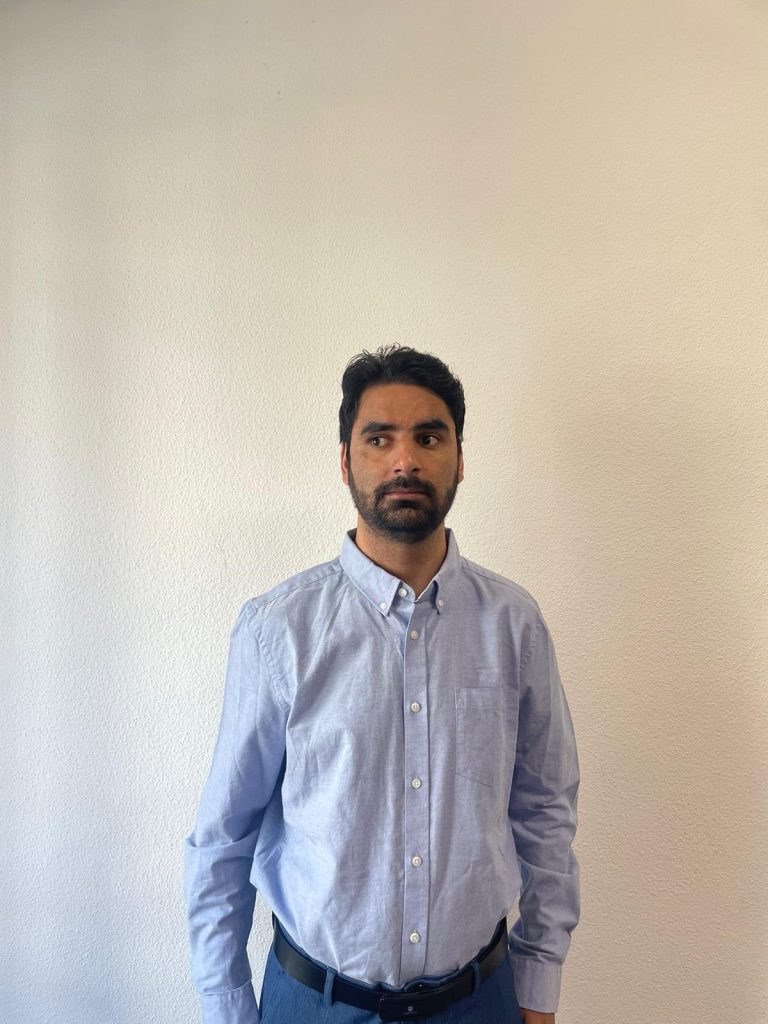
My engagement with disability is shaped by the intersection of lived experience, academic scholarship, community leadership, and policy engagement. As a person with a visual disability, I have firsthand experience navigating barriers in education, mobility, technology, and public participation. These experiences have informed my commitment to disability justice and my understanding of disability as a social, political, and human rights issue.
Expand to read the remainder of Aqib’s statement
As a scholar, I have engaged deeply with Critical Disability Studies through my graduate studies in Politics and International Relations at Jawaharlal Nehru University and Human Rights and Diplomacy at the University of Stirling. My master’s dissertation examined the right to inclusive education under Article 24 of the UNCRPD through an autoethnographic study of higher educational institutions in India, bringing together lived experience and critical disability scholarship.
As a disability advocate and community leader, I have trained visually impaired persons in assistive technologies, raised awareness among families of disabled children regarding rights and government programs, hosted a radio program on accessible tourism, and advocated for accessibility improvements in higher education institutions. I am also the founder of Inclusive Insights Foundation and the Indian Society of Disability Studies (ISDS), initiatives dedicated to advancing disability scholarship, advocacy, and community dialogue.
These experiences have prepared me for both positions. As an At-Large Board Member, I would contribute experience in organizational leadership, disability advocacy, policy engagement, and international disability scholarship. As a Graduate Student Representative, I would bring the perspective of a recent graduate student who understands the opportunities and challenges facing emerging scholars, particularly disabled students and those from underrepresented regions such as the Global South.
My leadership experience has centered on building organizations, fostering communities, and creating opportunities for engagement within disability-focused spaces.
As the founder of Inclusive Insights Foundation and the Indian Society of Disability Studies, I have led strategic planning, community-building, event organization, stakeholder engagement, communications, and partnership development. Through these initiatives, I have organized and moderated discussions, engaged with scholars and practitioners across countries, and worked to create platforms that connect research, advocacy, and lived experience.
I have also held leadership roles through the JNU Vision Forum, where I helped organize disability-related events and advocated for accessibility reforms, including a successful campus accessibility audit. My volunteer work includes training persons with visual impairments in assistive technology and contributing to disability awareness initiatives at the community level. In addition, my current placement with the Department of Empowerment of Persons with Disabilities, Government of India, through the YLAC Breaking Barriers Fellowship has provided valuable experience working with public institutions, policy stakeholders, and disability governance processes.
Although my fundraising experience is limited compared to some candidates, I have experience building networks, mobilizing participation, cultivating partnerships, and sustaining volunteer-driven initiatives. These skills have been essential in developing new disability-focused organizations and communities.
These experiences have prepared me to contribute effectively in either role. As an At-Large Board Member, I would bring organizational leadership experience, stakeholder engagement skills, and a commitment to helping SDS grow as an inclusive and globally connected organization. As a Graduate Student Representative, I would focus on student engagement, mentorship, community-building, and creating pathways for greater graduate student participation within SDS.
If elected to serve on the SDS Board, I would approach the role with a focus on strengthening the Society’s global relevance while ensuring that it remains grounded in the lived realities and political struggles that shape disability across contexts.
One of my key priorities would be to deepen engagement with the Global South. Disability Studies as a field still reflects significant geographic and epistemic imbalances, and I would work to create more sustained pathways for scholars, practitioners, and activists from regions like South Asia, Africa, and Latin America to participate meaningfully in SDS spaces. This includes not only representation, but also valuing different ways of knowing, writing, and producing knowledge.
I am also committed to making SDS more accessible in practice, not just in principle. This means strengthening accessibility across conferences, publications, and digital engagement—particularly for persons with diverse disabilities, those with limited resources, and those outside traditional academic institutions.
Another area I would like to contribute to is bridging scholarship and practice. Through my own work, I have seen the importance of connecting critical disability theory with policy, advocacy, and community-based work. I would support initiatives that bring academics, activists, and policymakers into closer dialogue, ensuring that SDS continues to be a space that informs and is informed by real-world struggles for disability justice.
Finally, I see SDS as a space for mentorship and community-building, especially for early-career scholars and disabled researchers who may not have access to strong institutional support. I would like to help foster more inclusive and supportive networks within the Society.
Overall, I hope to contribute to an SDS that is more globally engaged, structurally accessible, and deeply connected to disability justice movements.
Holly Manaseri (she/her)
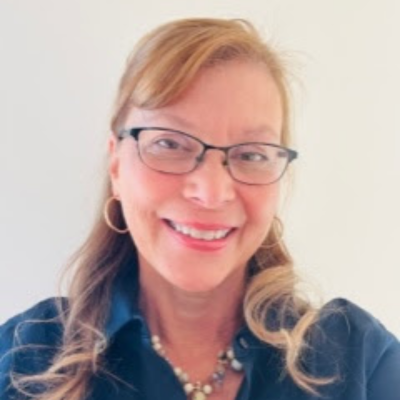
I am a member of the graduate faculty of the Disability Studies Certificate program at the University of Hawaii and hold a degree in the field from Syracuse University. I am a scholar in the field, a family member of an individual with a disability, and work closely in an outreach capacity with our Hawaii state DD Council and other Disability agencies in my professional role.
Working at the Center on Disability Studies at UH, an organized research unit dependent on approximately 90% grant funds, I bring professional experience as a PI, as a conference chair on the Pac Rim International Conference on Disability and Diversity and over my career have served on numerous community facing committee roles. I am also the executive director of a nonprofit my husband and I founded focused on art and wellbeing- https://lakeshore-arts-inc.square.site/ and our LLC running an art gallery co-op with 23 artists at Pittsford Fine Art which we founded. These experience have equipped me in community outreach, event coordination, marketing and fundraising which I feel would equip me in serving SDS
Expand to read the remainder of Holly’s statement
As an organization with a long history of interdisciplinary, and international scholarly organization dedicated to promoting Disability Studies I believe my professional and lived experiences are aligned with your mission and vision. I have demonstrated skills as a collaborative leader having worked in formal leadership roles in higher education and K-12 education and believe I can positively contribute to the SDS Board decision making informed by a personal commitment to the expansion of critical disciplinary studies and an interdisciplinary perspective. I believe all organizations working in this area can benefit from a deep review of their internal and public facing systems to ensure accessibility and commit to expanding plain language in their publications as well as strategic long range planning for sustainability and growth. I would love to participate in your work in these areas.
Silvana Matassini Eyzaguirre (she/her)
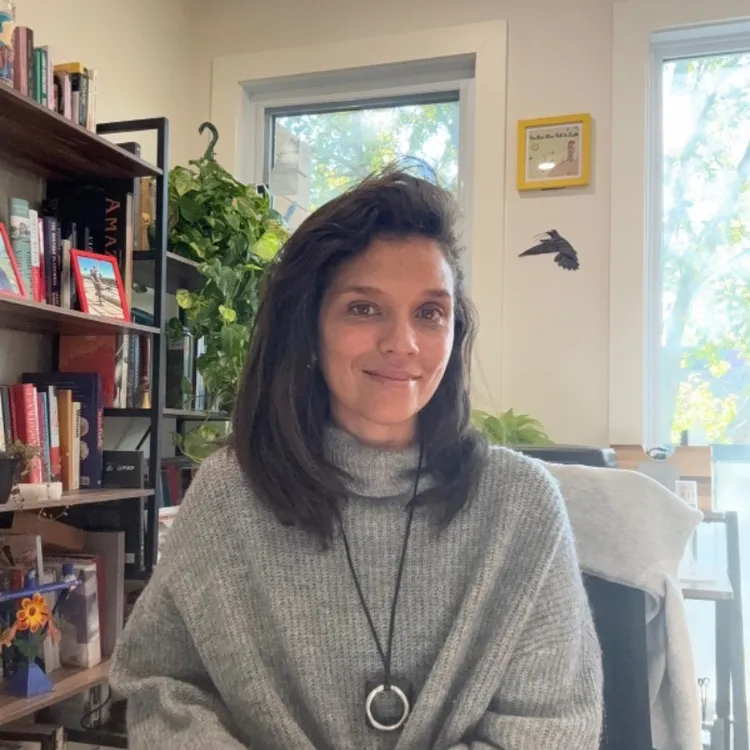
I am a medical anthropologist and qualitative researcher whose work focuses on gender, health, embodiment, pain, and inequalities in access to care. My current research on women’s diagnostic trajectories in Peru, including work on endometriosis and chronic pain, has deepened my engagement with Critical Disability Studies through questions surrounding lived experience, legitimacy, invisibility, and the social and institutional dimensions of suffering.
Expand to read the remainder of Silvana’s statement
My work is particularly concerned with how certain forms of pain and bodily experience are minimized, misrecognized, or rendered invisible within biomedical systems, especially in relation to women and historically marginalized populations. Drawing from feminist medical anthropology and qualitative methodologies, I am interested in how people navigate diagnostic uncertainty, stigma, structural inequalities, and everyday forms of exclusion within healthcare systems.
I also bring a transnational and Global South perspective to these conversations. Much of my research has focused on vulnerable and underserved populations in Peru, including older adults, migrant populations, and women facing barriers to healthcare access. Across these projects, I have sought to center lived experience, collaborative and reflexive qualitative methods, and attention to embodiment and everyday life.
I have experience working across nonprofit, community, and public engagement settings in both Peru and the United Kingdom. Earlier in my career, I worked with NGOs in the UK, including HelpAge International, where I was involved in communication and outreach activities related to ageing and social wellbeing.
In Peru, I have also participated in volunteer and community-based work with the Canevaro shelter for older adults in Lima, where I supported accompaniment activities and helped organize recreational and fundraising initiatives. This included coordinating events and outreach efforts with ministries, NGOs, and community organizations to support older residents and strengthen public engagement around ageing and care.
More recently, I have collaborated closely with patient advocacy groups focused on endometriosis, particularly through outreach and public dissemination efforts aimed at increasing awareness of women’s pain, diagnostic inequalities, and barriers to healthcare access. My broader academic and public-facing work often seeks to bridge research, advocacy, and community engagement.
In addition, I have participated in fundraising and awareness initiatives through organizations such as CARE UK, including community walking and running events organized to support humanitarian and social causes.
Through these experiences, I have developed collaborative, interdisciplinary, and community-oriented approaches to leadership and engagement, particularly around health equity, gender, ageing, and lived experience.
I hope to contribute to expanding SDS’s interdisciplinary and public-facing collaborations by helping build connections across different forms of knowledge production, scholarship, and advocacy. I believe there is significant potential for SDS to continue fostering dialogue not only across academic disciplines, but also between researchers, artists, activists, patient communities, and broader public audiences.
In particular, I am interested in supporting conversations between Disability Studies and fields such as medical anthropology, feminist qualitative research, graphic medicine, and narrative and visual approaches to lived experience. These approaches can offer powerful ways of making experiences of disability, chronic illness, pain, and care more visible, accessible, and socially meaningful beyond traditional academic formats.
I am especially committed to increasing visibility around chronic pain and conditions that are frequently minimized, misunderstood, or rendered invisible within healthcare systems and public discourse, particularly those affecting women and historically marginalized populations. I believe SDS can continue to play an important role in advancing critical conversations that move beyond narrow biomedical understandings of disability and instead foreground embodiment, relationality, care, and lived experience.
More broadly, I would hope to support SDS as a collaborative and intellectually open space that encourages innovative forms of scholarship, public engagement, interdisciplinary exchange, and inclusive community-building across diverse perspectives and experiences.
Souraya Sue ElHessen (she/her)
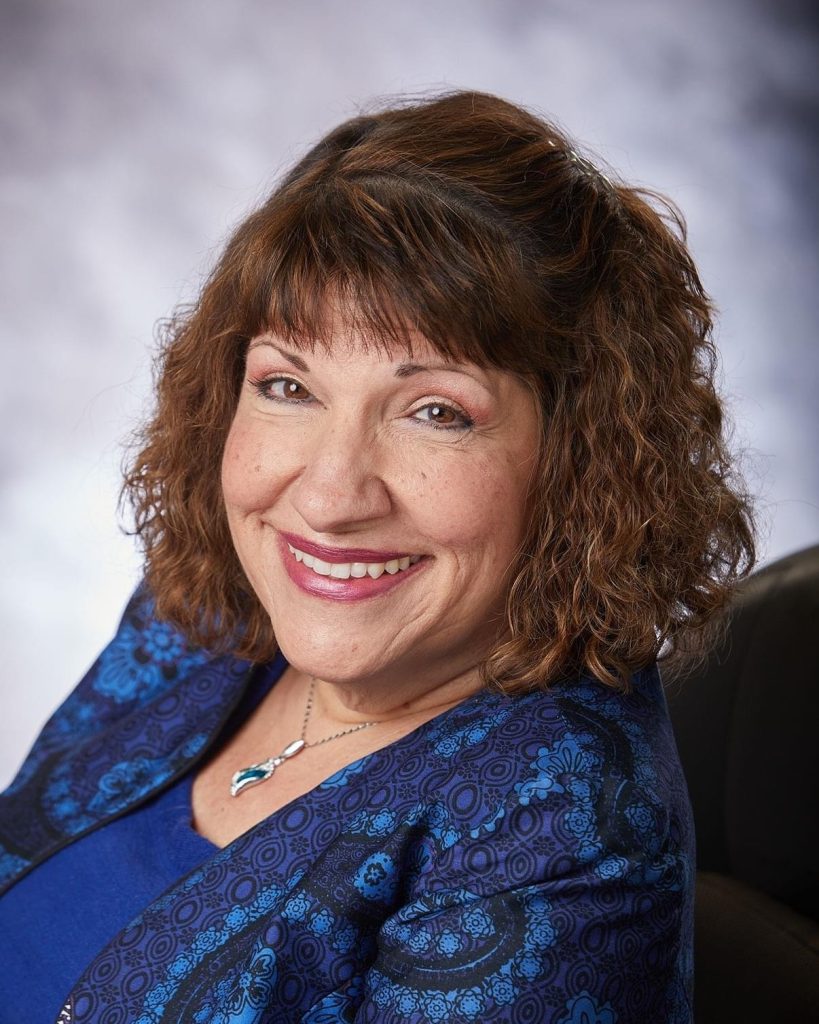
As a person with a physical disability, I provide, lived experience and insight on advocacy, disability justice as well as activism. As the ADA coordinator for the City Of Santa Monica,, I provided guidance on accessibility and accommodation issues across citywide departments and businesses. Currently as Ms Wheelchair California 2026 I play , key role in leadership by being able to provide advocacy and activism given my platform. My platform focuses on providing training to our youth and young adults on the Americans With Disabilities Act so they will empowered to advocate for themselves, and carry on the legacy of those who came before them. Because the law is only as good as one, who knows it and uses it. I’ve served on many boards, as well as commissions to promote disability, advocacy, and activism throughout the state of California. I co-taught and developed a disability studies course that was piloted in a graduate program through the department of education at USC.
Expand to read the remainder of Souraya’s statement
I have extensive experience in the nonprofit sector, where I’ve provided training and served as a Board Member, including in fundraising activities. My current roles include Ms Wheelchair California 2026 and Board Member for Dogs For Better Lives, both of which involved fundraising and engagement. Previously, I also served on the Disability Access Commission for the state of California, where I was appointed by the governor and served as Education and Outreach Chair.
My goal is to broaden the scope and purpose of disability studies by utilizing awareness and communication platforms. I firmly believe that disability studies holds immense significance across various interdisciplinary programs, majors, and disciplines in fostering greater inclusion and equity.My intention is expand the purpose and mission of disability studies through awareness and communication venues. I believe that disability studies plays a vital role across interdisciplinary programs, majors and disciplines to create greater inclusion and equity.
Renny Thomas
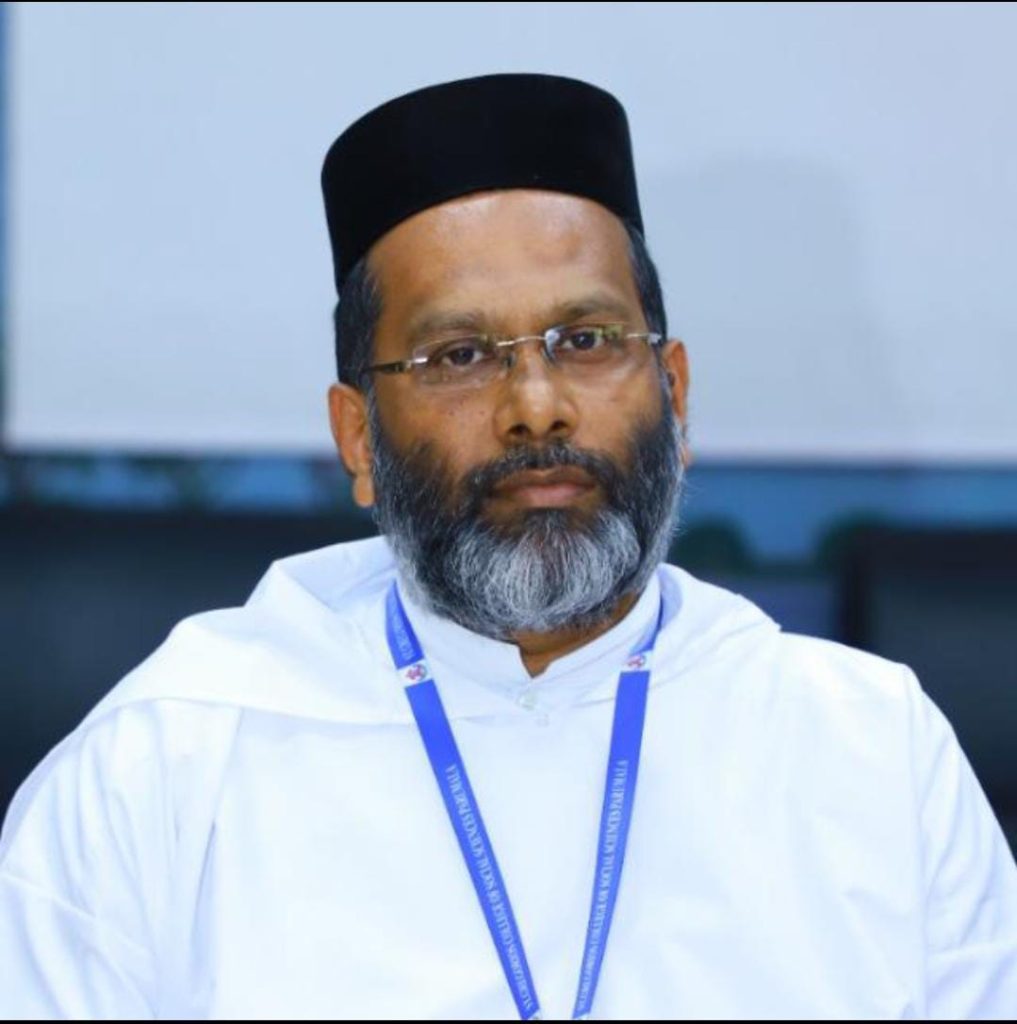
I am currently serving as Assistant Professor at the Inter-University Centre for Disability Studies (IUCDS), Mahatma Gandhi University, Kottayam, Kerala, India where I engage in teaching, research, advocacy, and community-oriented initiatives related to disability inclusion and social justice. My academic and professional work has consistently focused on marginalized populations, including persons with disabilities, children living with HIV, institutionalized children, migrant labourers’ children, tribal communities, and the elderly.
Expand to read the remainder of Renny’s statement
I have actively contributed to disability awareness and inclusive education initiatives through seminars, workshops, and invited lectures, including “SAMAVESHAN: Towards an Inclusive Society” and the National Seminar on Rights of Persons with Disabilities and Empowerment. I also served as Faculty Coordinator for the International Conference on Disability and Social Work – Inclusive Futures 2031, jointly organized by IUCDS and the Kerala State Commissionerate for Persons with Disabilities on March 25 & 26, 2026.
My research and publications emphasize dignity, quality of life, intersectionality, and social inclusion, including recent work on Inclusive Academia: Intersectionality of Disability, Gender and Caste.
My professional journey combines academic leadership, nonprofit engagement, community organizing, and interdisciplinary collaboration. I have held several leadership positions within educational, religious, and social service institutions, including serving as Principal (i/c) and Head of the Department of Social Work at St. Gregorios College of Social Science, Parumala, Kerala, India. I currently serve as Assistant Professor at IUCDS, Mahatma Gandhi University, Kottayam, Kerala, India.
Within nonprofit and community sectors, I have served as Coordinator and later Director of the Ministry of Human Empowerment in the Diocese of Chengannur, Malankara (Indian) Orthodox Church, where I worked on counselling, community development, youth engagement, and empowerment initiatives. I also served as Secretary of the Baselios Counselling Centre, conducting premarital counselling and psychosocial support programs.
I have extensive experience organizing conferences, seminars, workshops, and academic events at regional, national, and international levels. Most recently, I coordinated the International Conference on Disability and Social Work – Inclusive Futures 2031. I am also an Executive Committee Member of the Indian Society of Professional Social Work ISPSW (2025–27) and a life member of several professional bodies, including the Kerala Association of Professional Social Workers (KAPS).
My experience includes committee collaboration, academic networking, program coordination, communication management, mentorship, and engagement with multidisciplinary stakeholders. I value collaborative leadership, inclusive participation, and sustainable organizational development.
If elected to the SDS Board, I hope to contribute toward strengthening global and intersectional perspectives within Disability Studies, particularly by amplifying voices and experiences from the Global South. I am committed to promoting inclusive scholarship, accessible academic spaces, and stronger collaborations between researchers, practitioners, activists, and community organizations.
I would like to support initiatives that encourage emerging scholars, students, and practitioners from underrepresented communities to participate actively in Disability Studies discourse. My background in social work, psychosocial care, community engagement, and interdisciplinary research enables me to contribute to conversations around disability justice, inclusive education, mental health, technology, and social policy.
I also hope to strengthen SDS’s outreach and engagement through collaborative events, accessible communication practices, and international networking opportunities.
Kaelin Ball (she/her)
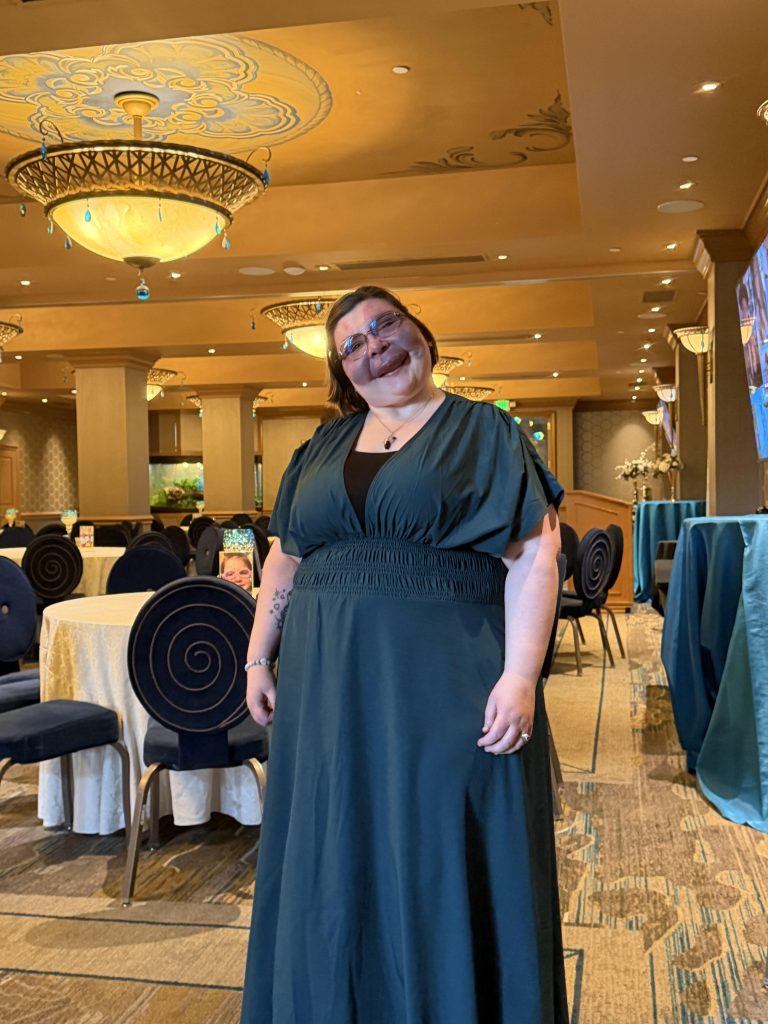
I have a Masters in Disability Studies from CUNY SPS. Prior to the paper credentials I was born with the rare disease Sturge-Weber Syndrome. I served as the Goodwill Ambassador for the Sturge-Weber Foundation during my childhood and teens, and testified before Congress on behalf of a rare-disease coalition. I also worked with Positive Exposure during its early years to help develop the “self-esteem plus self-acceptance equals self-advocacy” model. I continually help others living with disability on a daily basis though not as professionally involved as I used to be. Something I look forward to changing by joining the Board.
Expand to read the remainder of Kaelin’s statement
Every 2 years the Sturge-Weber Foundation hosts their international conference. I am always an active part of helping staff execute the conference by wrangling speakers or photographers, making copies, answering questions and often counseling attendees. Most recently I volunteered at the biggest donor fundraiser for Sturge-Weber and would argue I was the reason someone sponsored $10,000 that night! I have fundraising experience and once helped raised $400 through a pampered chef fundraiser.
By committing to three years on the Board of Directors, I hope to show that Disability Studies is still important outside of academia or your day to day work week. There are many different facets to the life of someone with a rare-disease or disability. I hope to add meaningful conversations about visible differences (such as the port-wine birthmark that hallmarks my disease). I hope to bring new perception and conversations as a patient, a professional and most importantly a human. My Masters thesis was a study to investigate how or of cosmetics impacts someone’s ability to date, get married, find love. What I discovered is it all comes down to self- love and self esteem. My life’s mission is to be a light for someone to find that self- love and self-acceptance first. It’s been a long journey but worth the learning!
Lidia Fonseca (she/her/ella)
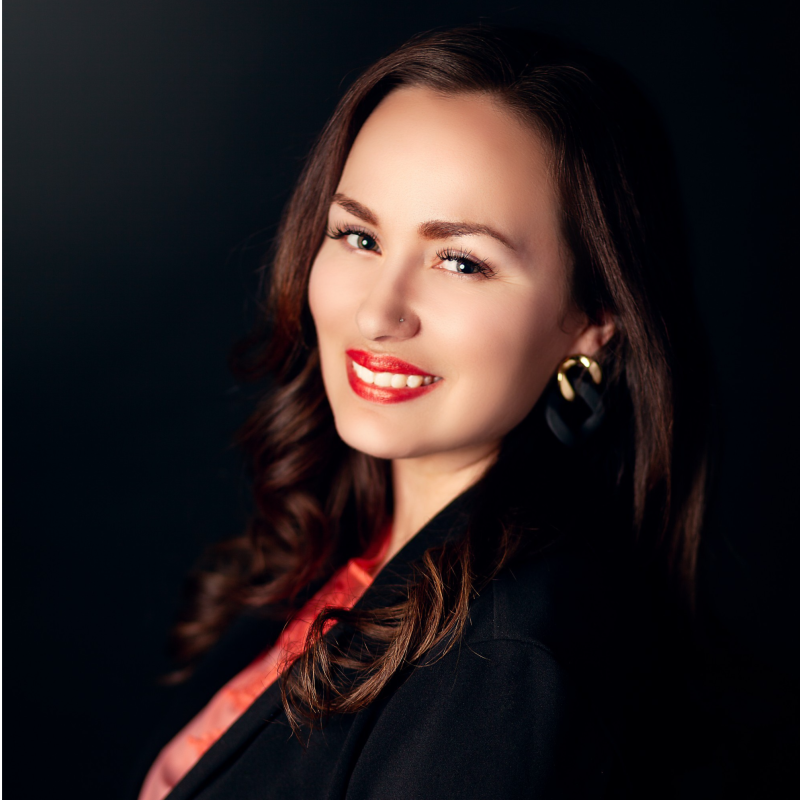
My experience is rooted in both lived disability experience and more than a decade of work in disability advocacy, independent living, and disability justice. I currently serve as Executive Director of a center for independent living where I lead organizational strategy, advocacy initiatives, and community partnerships supporting people with disabilities across South Texas. Before stepping into executive leadership, I worked in several direct service and program leadership roles focused on helping disabled individuals navigate barriers related to employment, transportation, healthcare, emergency preparedness, and community access.
Expand to read the remainder of Lidia’s statement
As a bilingual Latina leader working in rural and border communities, I understand how disability intersects with race, language, poverty, geography, and culture. That perspective has shaped both my advocacy and my commitment to disability justice that centers communities most impacted by systemic barriers.
My advocacy work has included coalition building, policy advocacy, and leadership within state and national disability organizations. In addition to organizational leadership, I have contributed through research, publications, presentations, and national training initiatives focused on disability employment, independent living, emergency preparedness, and equitable access. At the center of all my work is a commitment to ensuring disabled people are not just included in conversations, but recognized as leaders, decision makers, and experts in our own lived experiences.
I have over a decade of nonprofit leadership experience within disability-led organizations, with extensive involvement in organizational management, board collaboration, coalition-building, conference leadership, public engagement, and fundraising strategy.
Throughout my career, I have worked closely with Boards of Directors to support governance, strategic planning, policy development, and organizational accountability. In my current role, I regularly provide data-informed recommendations, operational reports, and long-term planning guidance to support board decision-making and organizational sustainability.
My leadership experience also includes extensive committee and coalition involvement at local, state, and national levels. I currently serve as:
President of TEXCIL Association of Centers for Independent Living in Texas
Secretary for the Association of Programs for Rural Independent Living
Regional Representative for REVUP Texas
Chair/President of a Regional Accessible Transportation Advisory Panel
Member of the Aging and Disability Resource Advisory Committee
Co-founder of the Hidalgo County Inclusive Response Committee
Co-founder of the Disability Advocates Coalition RGV
I have actively contributed to conference planning, professional training initiatives, webinars, and national presentations focused on disability employment, rural independent living, emergency preparedness, transportation access, and organizational sustainability. I have presented at national and regional conferences, including the Association of Programs for Rural Independent Living Conference, South Texas All Hazards Conference, Disability Employment Technical Assistance Center trainings, and IL-NET national webinars.
My fundraising and development experience includes grant development, grant compliance oversight, partnership cultivation, procurement coordination, and long-term sustainability planning. During my leadership tenure at VAIL, I helped support organizational growth that expanded the operating budget from approximately $927,000 to $2.2 million through diversified funding strategies, collaborative partnerships, and program expansion initiatives.
Across all of my nonprofit leadership work, I strive to build collaborative, accessible, and disability-affirming environments that prioritize transparency, community engagement, and sustainable systems that empower disabled people and communities.
What I hope to achieve on the SDS Board is simple: I want to help move disability justice from conversation into action. Too often, disabled people; especially those of us who are rural, Brown, bilingual, poor, immigrant, multiply marginalized, or outside of major academic spaces; are spoken about instead of being centered as leaders in the work shaping our futures.
As Judy Heumann reminded us, “Disability only becomes a tragedy when society fails to provide the things we need to lead our lives.” That idea has guided both my advocacy and my leadership. I do not believe access is charity. I believe access is power, community, and liberation.
I want to help SDS continue growing into a space where scholarship and activism are not separated from lived experience. We need spaces where disabled people can bring our full selves: our research, our organizing, our culture, our anger, our joy, and our survival; and know those experiences matter equally. I especially want to elevate voices that are often missing from national conversations: disabled people from border communities, rural communities, communities of color, and multilingual communities who are navigating layered systems of exclusion every day.
Professionally, I have spent my career building disability led systems that are sustainable, collaborative, and rooted in community accountability. But beyond titles and leadership roles, what drives me is making sure disabled people have real influence over decisions that impact our lives. I want SDS membership to know that I see board service as collective work; not symbolic leadership. I believe leadership means listening, building relationships, challenging barriers, and making room for others to lead beside you.
I also hope to strengthen connections between academic disability studies and grassroots disability organizing. Some of the most transformative disability knowledge exists outside of institutions: in our communities, mutual aid networks, independent living spaces, advocacy groups, and lived experiences. I want to help create stronger bridges between scholarship, activism, policy, and community action so that our work reaches beyond conferences and into people’s everyday lives.
Most importantly, I want to contribute to a board culture that is accessible, transparent, collaborative, and grounded in disability justice values.
Phillipa Vincent-Connolly
Phillipa Vincent-Connolly is an historian, writer, and published author of historical fiction and nonfiction. She is a consultant on many exciting projects across a broad spectrum with a special interest in disability and is becoming the ‘go-to’ broadcaster on this subject, especially recently with the publication of her book, ‘Disability and the Tudors.’ Published by Pen and Sword history imprint, currently, this is the first book in a series on disabilities in specific eras and benefits from Phillipa’s own experience of living with Cerebral Palsy.
Expand to read the remainder of Philipa’s statement
She achieved her degree in History and Humanities in 2011 and her PGCE, QTS, in 2014, and NQT 2019, in teaching (secondary), and part of her MA Graduate Diploma in History in 2020, and is currently specialising in disability history. She has spoken at the National Archives and the British library to great acclaim. Her experience in teaching makes her an authoritative and engaging public speaker. She is a Fellow of the Royal Historical Society.
Phillipa has written for History Today,Blitzed Magazine, has been interviewed regularly for BBC radio, and has appeared in C5 documentaries, and mini-TV documentaries.
Among her many interests, she has a deep and abiding love for all things historical, archives, artefacts, architecture, fashion, and royalty. Phillipa is also a keen activist, giving a contemporary voice to disabled people of the past, and those who currently feel disenfranchised. Her own disability has allowed her to identify and empathise with those who have not been heard and she is passionate about equality for the disabled. She lives in Poole, Dorset, but is not solely UK centric, as she has a broad spectrum of knowledge and research on which to draw.
A rising star in historical fiction too, with her ‘Timeless Falcon’ historical fiction series of books, Phillipa has both the research and writing abilities to adapt to any project and is the future of the past.
I am director of a non profit Aims for Life-Coaching for Disabled people. I have also spoken at Teach Meet events and conferences on disability history and to the NHS on intellectual disability history.
I would like to receive potential sponsorship to finish my Masters in disability history, and also start my PhD on disability history, as well as support colleagues on disability history collaborations and disability issues in general.
Carey Applegate (she/her)
I came more fully into Critical Disability Studies and Disability Activism in 2020, when I became more comfortable naming myself as a disabled person and thinking more deeply about how disability shaped my life and the lives of people around me. At the time, three generations in my household were each navigating disability in different ways, and I was also working in community education with youth and adults whose lives were shaped by disability. That combination pushed me to think more intentionally about disability, access, and community.
Expand to read the remainder of Carey’s statement
My experience is grounded first in lived disability experience, and then in teaching, mentoring, and leadership. I am especially interested in the intersections of education studies, rhetoric, activism, and disability studies, which are at the heart of my emerging research. In my teaching and digital accessibility work, I have focused on helping people understand accessibility not just as compliance, but as a matter of user experience, responsibility, and justice. As Director of Digital Accessibility at the University of Illinois Springfield, I have focused on making accessibility more visible, more valued, and more integrated into campus life through policy work, culture change, and student team leadership.
My nonprofit and mission-driven leadership experience is grounded in education and community-based work, and I have held leadership roles in English education, instructional design, and digital accessibility. Across those roles, I have contributed to committees and advisory work, usually around curriculum and technology, and I have developed strengths in leadership and strategic planning. I also have experience with grant writing and program support, and I have been engaged in education-focused workshops, trainings, and conference presentations at the local, state, and national levels for the past 20 years. I would bring that same combination of strategy, steady leadership, and commitment to community to my work with SDS.
I hope to help SDS grow membership, strengthen engagement, and turn ideas into action. One of my strengths is moving from data gathering and big-picture goals to practical planning and implementation. My background in program/project management helps me move teams from big-picture thinking to clear priorities and actionable next steps. As an SDS board member, I would want to help SDS grow in sustainable ways, support new and emerging scholars, and strengthen the organization’s long-term financial stability.
Lanona Lynette Jones (she/her)
As a nonprofit leader, disability advocate, and community organizer, my work has centered on advancing equity, access, civic engagement, wellness, and systems change for disabled individuals and underserved communities throughout Georgia—particularly in rural and historically marginalized areas. I serve as Executive Director of Inspire PositivFity, Inc., where I lead initiatives focused on disability voter engagement, mental health advocacy, re-entry support, health equity, and community empowerment. Through statewide partnerships and coalition work, I have helped develop programs that elevate the voices and lived experiences of disabled individuals, including those impacted by poverty, mental health challenges, justice-system involvement, transportation barriers, and healthcare disparities.
Expand to read the remainder of Lanona’s statement
My leadership includes serving as a Leadership Team Member with REV UP Georgia, a national disability voting rights initiative; Program Director for the NAMI Henry/Fayette Steering Committee; and active involvement with disability-centered civic engagement and advocacy efforts across Georgia. I have coordinated disability-inclusive outreach initiatives, voter education campaigns, community dialogues, and wellness-focused programming designed to reduce stigma and increase access to resources and leadership opportunities.
My approach is deeply grounded in Disability Justice principles that recognize intersectionality, collective access, dignity, community care, and the importance of centering those most impacted by systemic inequities. I believe disability advocacy must include rural communities, Black and Brown communities, people with mental health conditions, caregivers, and individuals often excluded from traditional systems of power and representation. I am committed to helping create inclusive spaces where lived experience is valued as expertise and where advocacy leads to sustainable community impact and policy change.
I bring more than 25 years of leadership experience in nonprofit management, community engagement, strategic planning, volunteer coordination, governance, and program development. I currently serve as Executive Director of Inspire Positivity, Inc. and Board Chairwoman of the Calumet Park Neighborhood Association, Inc. (CPNA), where I oversee organizational operations, community partnerships, grant development, strategic initiatives, and board governance.
Throughout my career, I have led and supported numerous nonprofit boards, committees, conferences, community initiatives, and large-scale events focused on civic engagement, health equity, disability advocacy, leadership development, youth empowerment, and community wellness. I currently serve as Chair of the Women in the NAACP (WIN) Committee for the Henry County NAACP and have coordinated signature events, leadership trainings, wellness initiatives, volunteer systems, sponsorship campaigns, and community outreach efforts. Most recently, I led the planning and execution of the 1st Annual WIN Luncheon, a large-scale wellness and leadership event that brought together elected officials, advocates, community leaders, sponsors, and residents.
My experience also includes fundraising strategy, grant writing, sponsorship cultivation, donor engagement, fiscal oversight, event planning, coalition-building, and collaborative leadership across nonprofit, faith-based, healthcare, advocacy, and civic sectors. I have successfully developed grant proposals, community partnerships, and operational systems that support organizational sustainability, accountability, and measurable community impact. In addition, I have participated in leadership and advisory roles with organizations such as Compassionate Atlanta, NAMI Georgia initiatives, REV UP Georgia, and community-based coalitions focused on equity and social justice.
I am passionate about building collaborative, mission-driven organizations that prioritize inclusion, transparency, community voice, and long-term sustainability.
If elected to the Society for Disability Studies Board, I hope to help strengthen connections between academic scholarship, community-based advocacy, grassroots organizing, and lived experience within the disability community. I believe SDS has a powerful opportunity to continue expanding access, representation, and engagement for disabled individuals from historically marginalized communities, including rural communities, Black and Brown communities, low-income communities, and individuals impacted by intersecting systems of inequity.
I hope to contribute a community-centered perspective that bridges research, advocacy, civic engagement, mental health awareness, and disability justice practice. I am especially interested in supporting initiatives that elevate emerging leaders, strengthen inclusive community partnerships, increase accessibility and engagement opportunities, and expand conversations around disability beyond traditional academic spaces.
Additionally, I hope to support SDS in fostering meaningful collaboration between scholars, organizers, nonprofit leaders, and advocates working directly within communities. I believe disability studies should remain connected to the real-life experiences, challenges, resilience, and leadership of disabled people across diverse backgrounds and geographic regions.
Above all, I would bring a spirit of collaboration, service, strategic leadership, and authentic community engagement to the Board. I am committed to helping SDS continue to grow as an inclusive, forward-thinking organization that values both scholarship and community impact while centering equity, justice, accessibility, and collective empowerment.
Colleen Campbell (she/her)
In addition to lived experience with the disabling effects of chronic illness, I have some experience with critical disability studies. At present my research agenda is primarily in the area of health law, though I am currently engaging in works in progress that specifically seek to contend with the challenges of complex chronic illnesses that are also disabling (like Long COVID and ME/CFS). I also plan to engage with disability stigma and its consequences in this body of work. In the past, I have—along with co-authors—written a couple of short pieces advocating for those living with the Long COVID and other complex chronic illness, including in how they contend with academic ableism. In these pieces we highlighted the specific issues that women of color face because of intersectionality and the unique challenges of negotiating with institutional accommodation for individuals with invisible disabilities that are episodic and complex. This area is a passion of mine.
Expand to read the remainder of Colleen’s statement
I previously served as a board member with the Birth Justice Bar Association (a bar association comprised of legal actors committed to addressing issues related to obstetric violence and obstetric racism, in short). In that capacity, I was involved in communication with the organization’s membership regularly, organizing panel events, and a conference. This experience was particularly meaningful because it was my first leadership role in the capacity as a board member and I was fortunate to work with a team of people who believed (as I did) strongly in the organization’s mission. Being surrounded by like-minded folks who are all equally mission-driven helped to make that experience meaningful and worthwhile. Throughout my career, I have also served on various institutional committees in the academy devoted to addressing issues of diversity. I bring this background and experience along with much enthusiasm to SDS.
My commitment to service drives me to apply for this position. I also embrace a leadership philosophy of inclusiveness that honors everyone’s expertise and contributions to an organization, which matches with SDS’ mission as well. I believe that my philosophy and experience described above will therefore add value to SDS. I am also highly driven. If there’s a need or gap to be filled, and I have capacity, I will meet the organization’s needs. While I do not have much experience with fundraising, I am open to brainstorming this area along with everyone else. In short, I am excited to support SDS and learning more about how I can contribute to advancing its organizational goals, including membership engagement/development and conference initiatives. To the extent that my contributions are needed elsewhere, I am happy to offer it as well. Thanks for considering my candidacy.
Evelyn Saru Jimmy (they/them)
My engagement with disability justice is both scholarly and personal. As a deaf faculty member navigating ADA accommodations in higher education, I live the structural barriers that critical disability studies theorizes. Institutional resistance to my accommodation requests did not discourage me, it became the foundation of my research.
My nonprofit leadership experience is emerging rather than extensive, and that is precisely why I am running. I bring transferable leadership experience from higher education, including serving as Assessment Coordinator at Indiana University East, where I design program evaluation systems, lead faculty-wide initiatives, and manage cross-departmental reporting. I have presented at academic conferences and contributed to edited collections, including a forthcoming chapter in The Rhetoric of Material Artifacts in Health and Medicine, demonstrating my capacity to represent an organization’s scholarly mission publicly.
Expand to read the remainder of Evelyn’s statement
I hope to bring the perspective of a deaf faculty member of color to SDS governance at a moment when disability justice in academic institutions is more urgent than ever. My goals are: to strengthen SDS advocacy for disabled faculty whose accommodation struggles are underrepresented in the literature, to build bridges between disability studies and adjacent fields like rhetoric of health and medicine, and to model what it looks like for a deaf professional of color to hold organizational leadership. I come not with all the answers but with a clear commitment to advocating for structural change, not individual accommodation, and to centering the voices of those most impacted by institutional ableism.
Hannah Brown (they/them)
My engagement with both Critical Disability Studies and Disability Justice is grounded my lived experience as a disabled, neurodivergent scholar and advocate. I also bring my skills and experience in sustained leadership across my university campus, broader, and national disability communities.
I have held several leadership roles such as being the Operations Director (Chair) of the University of Victoria’s (UVic’s) Society for Students with a Disability since February 2024, a Peer Mentor for students with a disability, and Learning Strategist with the Centre for Accessible Learning. Also, I have held membership and been an advocate on several UVic Committees, such as the Senate and Accessibility Committee. From August 2023 to March 2026 I was a Job Coach for the National Educational Association for Disabled Students’ Pathways to Employment Program. In my roles I have worked to advance accessibility, collective care, and structural change.
Expand to read the remainder of Hannah’s statement
My disability activism centres community, intersectionality, and the removal of barriers to true inclusion. Through this I have delivered more than 30+ workshops and trainings on disability, neurodiversity, accessibility, and anti ableism. I have also served as a panelist on disability and human rights; and contributing to UVic’s institutional accessibility planning.
As a researcher, my work in disability justice, intersectionality, and social movements informs my approach to all the work I do. I bring both scholarly grounding and lived experience to conversations about access, representation, and inclusive knowledge production.
I bring extensive nonprofit leadership and governance experience across multiple committees, boards, and community organizations. My roles span financial stewardship, policy development, hiring, accessibility planning, and community engagement. Examples of this include being the Operations Director (Chair) of the UVic’s Society for Students with a Disability since February 2024 and being the Treasurer/Finance Representative of the UVic Pride Collective for over 2.5 years. I have also been a Steering Committee Member as part of UVic’s Accessibility Committee for over two years, on which governs and organises meetings of the general committee.
As well I this I have contributed to conference organising, community events, and public facing education through keynote talks, panel participation, event planning/organisation, and workshop organisation/facilitation. For example, I was part of organising the Society for Students with a Disability Autism Awareness Week in 2025 and Disability Symposium in 2023. These roles have strengthened my skills in collaborative governance, agenda setting, community engagement, and navigating complex institutional systems.
On the SDS Board, I hope to advance community rooted disability justice, strengthen the accessibility and sustainability of SDS programs, and contribute to a culture of collaborative, accountable leadership.
My priorities include:
- Strengthening pathways for emerging disabled scholars and youth leaders to flourish, particularly those who experience multiple marginalisation.
- Supporting editorial and knowledge mobilisation work that centres disabled voices, challenges academic gatekeeping, and uplifts community engaged scholarship.
- Building cross movement connections between disability justice, queer and trans liberation, migrant justice, and anti racist organizing, supporting intersectional work.
- Ensuring transparent, values aligned governance, drawing on my experience in financial stewardship, committee leadership, and policy development.
Ultimately, I hope to contribute to a culture that is reflective, relational, and grounded in the principles of disability justice, which centres care, interdependence, and collective liberation.
Claire James Carroll (she/her)
I am Disabled researcher with a focus on improving the accessibility of born-digital literature and resources. I am wrapping up my PhD dissertation, which explores interactive fiction (IF) and the varied accessibility created through supportive walkthroughs and hint guides. Personally, I have spent several years in and out of wheelchairs and have been impacted by experiences navigating both the American health system and socialised public alternatives. Currently I am based at the University of Cambridge, where I have served as my college’s postgraduate Disability Officer to advocate for student access and support. I subsequently served as the inaugural Advocacy and Engagement Fellow for the UK-Ireland Digital Humanities Association, which expanded the intersectionality of my advocacy.
Expand to read the remainder of Claire’s statement
I have extensive organisational and administrative experience through the coordination of an annual lecture series and the production of a variety of musical performances. I have organised a successful international conference and coordinated a hybrid reading group around interdisciplinary research methodologies. My Advocacy fellowship worked to adjust programming in line with community needs and interests, which I believe would make me an asset to the Membership Engagement committee, but am happy to support the society in any way I can.
I hope to support a diverse calendar of year-long programming and expand awareness for the Society in related scholarly societies. In my previous fellowship, I worked to better connect researchers and academics with GLAM professionals and would be very glad to replicate that work here.
James R. Hoyne
[No Photo]
My involvement in the disability community is rooted in both lived experience & advocacy. As a person with disabilities who has undergone 58 surgeries throughout my lifetime, including spinal surgeries to address scoliosis & spinal stenosis, I have firsthand experience navigating healthcare systems, accessibility barriers, as well as the long-term realities of living with complex medical conditions.
For more than a decade, I have served as a rare disease & disability advocate, working to elevate the voices of individuals & families whose experiences are often overlooked in healthcare, public policy & community decision-making. My advocacy has focused on increasing awareness, promoting equitable access to healthcare & services, supporting patient-centered policies & encouraging meaningful inclusion of people with disabilities in conversations that directly affect their lives.
Expand to read the remainder of James’s statement
My lived experience has shaped my understanding of Critical Disability Studies & Disability Justice principles, particularly the importance of challenging ableist assumptions, recognizing the intersectionality of disability with other identities & valuing the expertise of disabled people as leaders in their own communities. I strongly believe that disability is not solely a medical issue but also a social, cultural & political experience that requires systemic change to remove barriers & create equitable opportunities.
In addition to my advocacy work, I have held leadership roles within nonprofit, civic, and community organizations, where I have worked to ensure that accessibility, representation & inclusion are integrated into organizational practices & decision-making processes. From 2012 to 2014, I served as a council member in Central Florida, where I gained valuable experience in community leadership, public engagement & collaborative decision-making. This experience reinforced my commitment to representing diverse voices & advocating for policies that promote equity & inclusion.
Since 2021, I have served as a member of the North Central Connecticut Board of Health, where I am currently serving a term that runs through 2029. In this role, I contribute to public health policy discussions & community health initiatives, bringing the perspective of a person with disabilities & patient advocate to conversations that impact health equity, accessibility & quality of life.
I am also a Board Member of Disability Rights Vermont, where I support efforts to advance the rights, independence & inclusion of people with disabilities. Through this involvement, I remain engaged with broader disability rights issues, including accessibility, self-determination, community integration & the protection of civil & human rights for disabled individuals.
Together, these experiences have strengthened my understanding of the intersection between disability advocacy, public health, policy & community engagement, while reinforcing my commitment to ensuring that disabled voices are represented in leadership & decision-making spaces.
My experience as an EMT also provided a unique perspective on the importance of disability-inclusive emergency preparedness, healthcare access & community support systems. Together, these experiences have strengthened my commitment to ensuring that disability perspectives are represented in both healthcare & public policy decision-making.
Throughout my work, I have sought to build bridges between individuals with disabilities, healthcare providers, policymakers & community organizations. I am committed to advancing disability rights, promoting self-advocacy & ensuring that disabled voices are represented at every level of leadership.
If selected to serve on the Board of Directors of the Society for Disability Studies, I would bring a combination of lived experience, advocacy expertise, public health leadership, nonprofit governance experience, as well as a deep commitment to advancing disability scholarship, justice, inclusion & community engagement.
My nonprofit leadership experience is grounded in service, advocacy, governance & community engagement. Over the years, I have held leadership positions within civic, nonprofit, public health & community-based organizations, where I have worked to advance accessibility, inclusion & equitable participation for individuals with disabilities & complex health conditions.
Since 2021, I have served on the North Central Connecticut Board of Health, where I contribute to public health policy discussions, community outreach efforts & initiatives that promote health equity & accessibility. I also serve as a member of the Connecticut Public Community Advisory Board, where I help provide community perspectives that inform public media engagement, outreach & service to diverse audiences throughout Connecticut. Previously, I served as a council member in Central Florida from 2012 to 2014, gaining valuable experience in governance, stakeholder engagement, strategic planning & community collaboration.
As a rare disease & disability advocate, I have participated in conferences, educational programs, awareness campaigns & public policy discussions at the local, state & national levels. My work has focused on building partnerships, engaging diverse stakeholders & amplifying the voices of individuals whose perspectives are often underrepresented in healthcare, disability & public policy conversations.
I am also a member of Disability Rights Vermont, where I support efforts to advance disability rights, accessibility, self-determination & community inclusion. Through these experiences, I have developed a strong understanding of nonprofit governance, board responsibilities, community engagement, stakeholder relations & the importance of fostering meaningful participation among members & the broader community.
If elected, I would bring a collaborative leadership style, a commitment to disability justice & inclusion, experience serving on public & nonprofit advisory bodies & passion for strengthening organizational engagement while supporting the Society for Disability Studies’ mission of advancing disability scholarship, advocacy & community impact.
If elected to the Society for Disability Studies Board, I hope to help strengthen the connection between disability scholarship, lived experience, public policy & community advocacy. As someone whose work has been shaped by both personal experience with disability, as well as years of advocacy, I believe SDS is uniquely positioned to advance critical conversations that challenge barriers, promote inclusion & elevate the voices of disabled people across diverse communities.
One of my priorities would be expanding opportunities for engagement among members from a wide range of backgrounds, including disabled advocates, students, researchers, healthcare professionals & community leaders. I would like to help foster greater collaboration between academic & non-academic communities so that disability scholarship remains accessible, relevant & connected to real-world experiences & challenges.
I am also committed to supporting efforts that increase accessibility, representation & meaningful participation within SDS. This includes encouraging diverse perspectives, promoting disability justice principles & ensuring that individuals from historically underrepresented communities have opportunities to contribute to & shape the organization’s work.
In addition, I hope to support initiatives that strengthen public awareness of disability issues, encourage interdisciplinary collaboration & expand SDS’s reach beyond traditional academic spaces. By building stronger connections among scholars, advocates, policymakers, as well as community members, we can help ensure that disability studies continue to inform positive social change.
Ultimately, I want members to know that I would approach this role as a collaborative listener, advocate & steward of the organization’s mission. My goal is to help SDS continue to grow as an inclusive, accessible & impactful organization that values both scholarship & lived experience while advancing disability rights, justice & equity.
Anurima Chatterjee (she/her)
My engagement with disability justice is both personal and professional. My daughter is a trauma survivor living with mental illness – navigating emotional dysregulation, rejection sensitivity, self-harm, and suicidal ideation. This lived experience as a caregiver has been a profound teacher, deepening my understanding of how systems fail disabled people and their families, and fuelling my commitment to building more inclusive, responsive environments.
Professionally, my 20+ years in education have centred inclusion as a core value. Through Project Inclubation at Footlights Foundation, which I co-founded, I work to embed inclusive learning ecosystems across schools and colleges using theatre-based methodologies. My work in Social-Emotional Learning (across government schools, universities, and non-profits) is rooted in the understanding that emotional and psychological diversity must be designed for, not accommodated as an afterthought. I approach disability not as a deficit to be managed, but as a call for systemic transformation in how we learn, teach, and build community.
Expand to read the remainder of Anurima’s statement
I bring extensive nonprofit and institutional leadership experience spanning over 15 years. As former Program Director for the READ Alliance (a USAID-funded project), I directed a national literacy initiative involving grant-making, donor compliance, and partnerships with six grassroots projects, thus gaining hands-on experience in the full lifecycle of funded nonprofit work. At UNNATI Organisation for Development Education, I managed monitoring and evaluation for a state-wide program serving tribal children in Gujarat.
I currently serve as a Board Member of Ashiyana Communities Foundation, where I contribute strategic insights and leadership coaching to support the organisation’s growth and governance. As Co-founder and Director of Footlights Foundation, I lead organisational strategy, stakeholder partnerships, and program development. At Footlights, we also design learning modules for teachers and classroom materials specifically aimed at building disability inclusion in educational settings.
My earlier roles at Educational Initiatives and Redbricks Education Foundation involved managing large-scale implementation across government and school systems, building institutional partnerships, and driving programs that reached thousands of students and educators. I have also contributed to conference and event programming through academic and professional engagements, and have experience working with boards and leadership structures in both nonprofit and academic contexts.
I hope to bring a Global South perspective to the SDS Board, one that is often underrepresented in international disability studies discourse. Working from India, I see daily how disability intersects with poverty, caste, gender, and access to education in ways that require locally-grounded, community-led responses. I want to help SDS build more intentional pathways for members and scholars from the Global South to participate, present, and lead within the organisation.
I also hope to strengthen SDS’s work at the intersection of disability and education, particularly around Social-Emotional Learning, inclusive pedagogy, and arts-based approaches. Drawing on my experience designing systems that support emotionally and psychologically diverse learners, I would like to contribute to how SDS engages schools, universities, and practitioners as allies in disability justice. Finally, as a caregiver to a child with mental illness, I want to ensure that psychosocial disabilities and mental health are centred within SDS’s advocacy and programming.
Becky King (she/her)
[No Photo]
I have a master’s degree in human rights practice with a focus on disability rights and justice. I have worked as a disability advocate for more than 20 years, most recently as the director of Arizona Achieve, a cross-disability self-advocacy coalition. I am continuing my study as a PhD student and will focus on communication disabilities and access to education and services. Most importantly, I am mom to a disabled adult and advocacy is our shared passion.
I have served as a volunteer in many non profit organizations including as a board member. I also have more than a decade of experience in non profit communications and event planning, including at a global philanthropic organization. Currently I serve on the board of the International Journal of Disability Policy and Advocacy. I am a member of the National Community of Practice State Alliance Team in Arizona. I am a committee member of the Arizona Supported Decision Making Advisory Council.
I hope to create change by working with other advocates and scholars and leveraging my skills, experience and passion in service to the disability community through this well-respected and impactful organization.
Tabetha (Tabby) K. Violet (any)
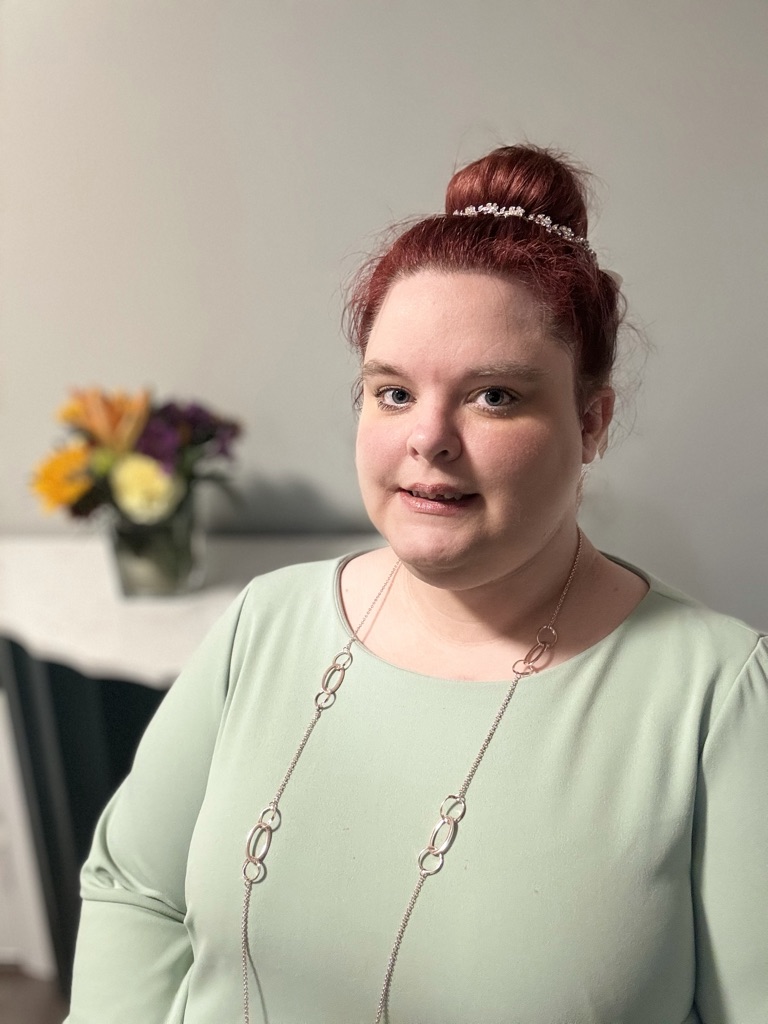
I am a disabled academic and have spent my career navigating institutional barriers in non-profit organizations, K-12 education, and academia. I also participate in community organizing and activism surrounding food security, housing, and other material needs and have experience working within the intersections of these structural issues as they are impacted by disability, race, gender, sexuality, and other markers of identity. My work critically investigates the ways in which contested illnesses are shaped and how that process undermines the autonomy and lived experiences of disabled and chronically ill people in particular ways. I believe in the tenets of disability justice, particularly leadership by the most impacted, and invest time in disability led spaces and coalitions.
Expand to read the remainder of Tabetha (Tabby)’s statement
I have experience working with large nonprofit programs and with universities to orchestrate week long programming, professional training sessions, and smaller conferences and symposia. I have experience leading students in a variety of fundraising efforts including to host their own symposia and to raise funds for the American Foundation for Suicide Prevention. In the symposia project, students were able to raise funds to support a day long event about disability studies on campus: they raised this funds from a variety of departments that were not invested in disability studies scholarship by meeting with the heads of each department and explaining why disability studies should matter to their discipline. In this spirit, I believe that cross disciplinary pollination is beneficial to advancing our engagement.
I plan to collaborate with other board and committee members to strategize around fundraising, membership retention, and organizing a meeting. I believe that we should co-explore three possibilities: establishing ourselves as an allied organization of a large existing conference, resuming a version of our own conference, or partnering with another small organization such as the Association for Ethnic Studies to share resources and co-conference. In all of these explorations and discussions, my priority is strengthening Disability Studies within the academy, particularly as programs and departments that have traditionally employed disability studies scholars come under attack. We can serve as a space to learn from one another and strategize for the survival of our work and discipline– work which impacts life outside of the academy with real world applications and which enriches the understandings and resilience of our students. We cannot afford to lose disability studies, and focusing our efforts on supporting disability scholarship need not be at odds with honoring the role of activism or advocacy. For example, I believe that we could add tremendous value to the field by working together to produce toolkits for aiding scholars to propose and accomplish disability studies programs on their campuses.
Nominees for Graduate Student Representative
Please choose two (2)
Eric Fishon
[No Photo]
My work is grounded in both lived experience and sustained academic and professional engagement in disability advocacy, with a particular focus on invisible and non-apparent disabilities. As someone who has navigated higher education and professional leadership while managing an unseen disability, I bring a perspective that bridges theory, research, and real-world application.
Academically, my studies in disability, education, leadership, and healthcare administration have allowed me to engage deeply with frameworks aligned with Critical Disability Studies, including the social model of disability, Universal Design for Learning (UDL), and disability justice principles that emphasize equity, access, and systemic change. My current work at the University of Florida has further strengthened my focus on how environments—especially educational and public spaces—can be redesigned to reduce barriers rather than place responsibility solely on individuals.
Expand to read the remainder of Eric’s statement
Professionally and publicly, I have developed multiple platforms to advance disability awareness and inclusion. Through the Dr. Disruptor Network, Friendly Ferns Publishing, and XTERMIGATOR Kids, I create educational content, tools, and storytelling initiatives that reframe disability from a deficit-based narrative to one centered on strengths, identity, and empowerment. My Inclusive Game Day initiative and related accessibility applications demonstrate how universal design can be implemented in real-world settings to support individuals with sensory, cognitive, and emotional needs.
This work reflects a commitment to disability justice that extends beyond awareness into action—designing systems, tools, and narratives that create equitable access for all.
I bring over two decades of nonprofit leadership experience, most notably serving as President of Long Island Against Domestic Violence for approximately 20 years. In this role, I led organizational strategy, community outreach, program development, and stakeholder engagement, working closely with survivors, community partners, and public agencies to provide critical support services. This experience required sustained leadership in high-stakes environments, including crisis response, advocacy, compliance, and resource development.
My work involved overseeing board operations, managing partnerships, coordinating events and awareness campaigns, and contributing to fundraising efforts that supported the organization’s mission and long-term sustainability. I developed a strong foundation in governance, accountability, and mission-driven leadership, while also ensuring that services remained accessible and responsive to diverse community needs.
Building on this experience, I founded XTERMIGATOR Kids, a nonprofit initiative focused on empowering children with unseen disabilities through storytelling, education, and community engagement. This organization reflects my continued commitment to advocacy, with an emphasis on early intervention, identity development, and inclusive education. Through this work, I have integrated fundraising, digital engagement, and program development to expand reach and impact.
Across both roles, my leadership has centered on creating inclusive environments, amplifying underserved voices, and ensuring that nonprofit initiatives translate into measurable, meaningful outcomes.
If elected to the Society for Disability Studies (SDS) Board, I aim to strengthen the connection between academic research, lived experience, and practical implementation. My goal is to support initiatives that move disability studies beyond theoretical discussion into applied, scalable solutions that improve everyday access and inclusion.
Specifically, I seek to:
* Advance the visibility and inclusion of individuals with invisible disabilities within SDS conversations, research priorities, and programming.
* Promote interdisciplinary collaboration that connects disability studies with fields such as technology, education, healthcare, and organizational leadership.
* Support the development of practical tools and resources that translate research into real-world applications, particularly in public environments, education systems, and digital platforms.
* Expand outreach and engagement through accessible content, storytelling, and emerging technologies, including AI-driven tools that enhance accessibility and communication.
* Strengthen pathways for students, early-career professionals, and advocates to engage with SDS, ensuring that the next generation of leaders reflects diverse experiences and perspectives.
ShayLee Hunter (she/her)
My experience with Critical Disability Studies, Disability Activism, and Disability Justice comes from both lived experience and my professional and volunteer work within the disability and chronic illness community. I have a background in advocacy and nonprofit leadership, focusing on increasing visibility for individuals with invisible and complex medical conditions and challenging the barriers they face in healthcare, education, and society.
Expand to read the remainder of ShayLee’s statement
Through my work with organizations such as Girls With Guts and Mascot Miracles Foundation, I have supported outreach efforts, storytelling campaigns, and community engagement initiatives that center on disabled voices and lived experiences. I also serve in ambassador and mentorship roles that focus on peer support, empowerment, and creating inclusive spaces where individuals feel seen and valued.
In addition, my advocacy work in child welfare and community programs has strengthened my understanding of intersectionality, access to care, and the importance of representation in systems that often overlook disabled individuals. I am especially passionate about shifting narratives around disability from limitation to lived experience, autonomy, and justice.
Overall, my work is rooted in amplifying disabled voices, building community connection, and supporting efforts that align with Disability Justice principles of inclusion, equity, and collective care.
I have extensive experience in nonprofit leadership, engagement, and fundraising through both professional roles and volunteer involvement. In my work within child advocacy and community nonprofits, I have led and supported fundraising events, coordinated donor outreach, and built partnerships with local businesses, schools, and community organizations to secure sponsorships and in-kind donations.
I have been actively involved in event planning and execution, including community drives, awareness events, and large-scale fundraisers, where I supported logistics, marketing, and donor engagement. I have contributed to securing donations for silent auctions, managing outreach campaigns, and helping ensure successful event outcomes through strong organization and collaboration.
In addition, I serve in outreach and ambassador roles, supporting engagement initiatives, storytelling, and community connection efforts that help grow awareness and participation. I am experienced in working with diverse stakeholders, including volunteers, board members, and community partners, to advance organizational missions and strengthen support networks.
Overall, my experience has focused on building relationships, supporting mission-driven fundraising efforts, and contributing to collaborative leadership environments that prioritize impact, accessibility, and community care.
On the SDS Board, I hope to help strengthen connection, accessibility, and visibility within the disability community while ensuring lived experiences remain at the center of decision-making. I want to support initiatives that increase engagement among members, expand outreach to underrepresented voices, and create more opportunities for meaningful participation and leadership development.
I am especially passionate about building programs and spaces that feel inclusive, supportive, and action-driven—where members feel empowered not only to share their experiences but also to help shape the direction of the organization. I also hope to contribute my experience in nonprofit engagement, storytelling, and community outreach to help grow awareness and strengthen partnerships that support the mission.
Ultimately, I want to help ensure the SDS Board continues to be a space where disability justice, collaboration, and community care are actively practiced, not just discussed.
Aqib Rehman
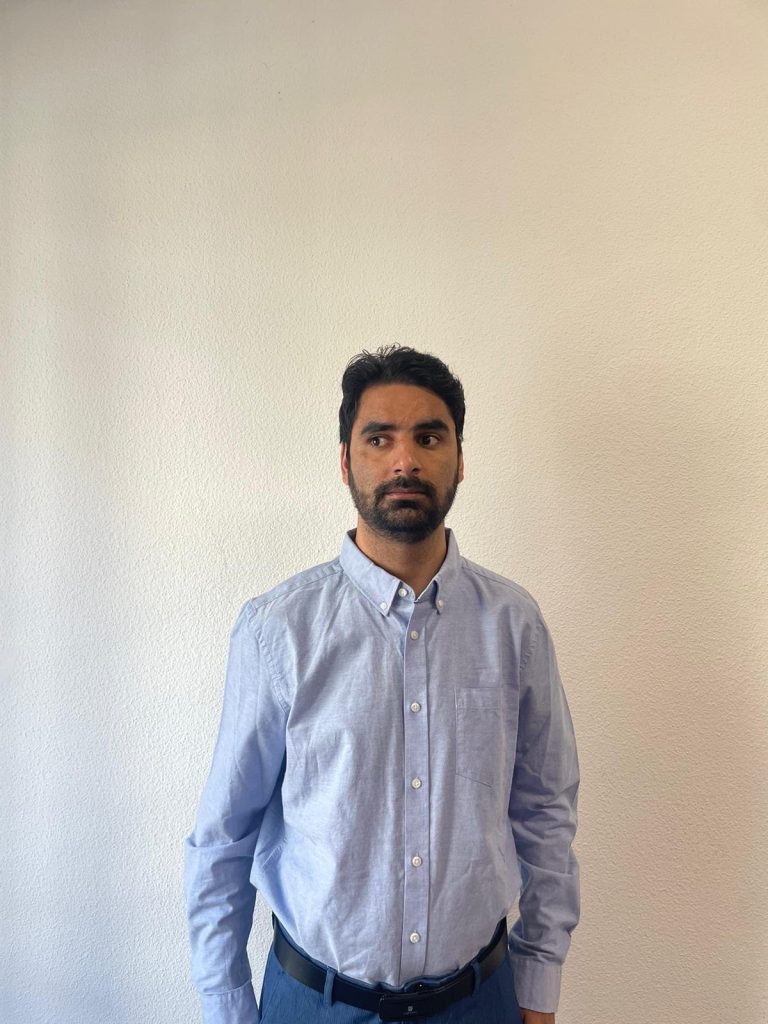
My engagement with disability is shaped by the intersection of lived experience, academic scholarship, community leadership, and policy engagement. As a person with a visual disability, I have firsthand experience navigating barriers in education, mobility, technology, and public participation. These experiences have informed my commitment to disability justice and my understanding of disability as a social, political, and human rights issue.
Expand to read the remainder of Aqib’s statement
As a scholar, I have engaged deeply with Critical Disability Studies through my graduate studies in Politics and International Relations at Jawaharlal Nehru University and Human Rights and Diplomacy at the University of Stirling. My master’s dissertation examined the right to inclusive education under Article 24 of the UNCRPD through an autoethnographic study of higher educational institutions in India, bringing together lived experience and critical disability scholarship.
As a disability advocate and community leader, I have trained visually impaired persons in assistive technologies, raised awareness among families of disabled children regarding rights and government programs, hosted a radio program on accessible tourism, and advocated for accessibility improvements in higher education institutions. I am also the founder of Inclusive Insights Foundation and the Indian Society of Disability Studies (ISDS), initiatives dedicated to advancing disability scholarship, advocacy, and community dialogue.
These experiences have prepared me for both positions. As an At-Large Board Member, I would contribute experience in organizational leadership, disability advocacy, policy engagement, and international disability scholarship. As a Graduate Student Representative, I would bring the perspective of a recent graduate student who understands the opportunities and challenges facing emerging scholars, particularly disabled students and those from underrepresented regions such as the Global South.
My leadership experience has centered on building organizations, fostering communities, and creating opportunities for engagement within disability-focused spaces.
As the founder of Inclusive Insights Foundation and the Indian Society of Disability Studies, I have led strategic planning, community-building, event organization, stakeholder engagement, communications, and partnership development. Through these initiatives, I have organized and moderated discussions, engaged with scholars and practitioners across countries, and worked to create platforms that connect research, advocacy, and lived experience.
I have also held leadership roles through the JNU Vision Forum, where I helped organize disability-related events and advocated for accessibility reforms, including a successful campus accessibility audit. My volunteer work includes training persons with visual impairments in assistive technology and contributing to disability awareness initiatives at the community level. In addition, my current placement with the Department of Empowerment of Persons with Disabilities, Government of India, through the YLAC Breaking Barriers Fellowship has provided valuable experience working with public institutions, policy stakeholders, and disability governance processes.
Although my fundraising experience is limited compared to some candidates, I have experience building networks, mobilizing participation, cultivating partnerships, and sustaining volunteer-driven initiatives. These skills have been essential in developing new disability-focused organizations and communities.
These experiences have prepared me to contribute effectively in either role. As an At-Large Board Member, I would bring organizational leadership experience, stakeholder engagement skills, and a commitment to helping SDS grow as an inclusive and globally connected organization. As a Graduate Student Representative, I would focus on student engagement, mentorship, community-building, and creating pathways for greater graduate student participation within SDS.If elected to serve on the SDS Board, I would approach the role with a focus on strengthening the Society’s global relevance while ensuring that it remains grounded in the lived realities and political struggles that shape disability across contexts.
One of my key priorities would be to deepen engagement with the Global South. Disability Studies as a field still reflects significant geographic and epistemic imbalances, and I would work to create more sustained pathways for scholars, practitioners, and activists from regions like South Asia, Africa, and Latin America to participate meaningfully in SDS spaces. This includes not only representation, but also valuing different ways of knowing, writing, and producing knowledge.
I am also committed to making SDS more accessible in practice, not just in principle. This means strengthening accessibility across conferences, publications, and digital engagement—particularly for persons with diverse disabilities, those with limited resources, and those outside traditional academic institutions.
Another area I would like to contribute to is bridging scholarship and practice. Through my own work, I have seen the importance of connecting critical disability theory with policy, advocacy, and community-based work. I would support initiatives that bring academics, activists, and policymakers into closer dialogue, ensuring that SDS continues to be a space that informs and is informed by real-world struggles for disability justice.
Finally, I see SDS as a space for mentorship and community-building, especially for early-career scholars and disabled researchers who may not have access to strong institutional support. I would like to help foster more inclusive and supportive networks within the Society.
Overall, I hope to contribute to an SDS that is more globally engaged, structurally accessible, and deeply connected to disability justice movements.
Nyika Suttie (she/her)
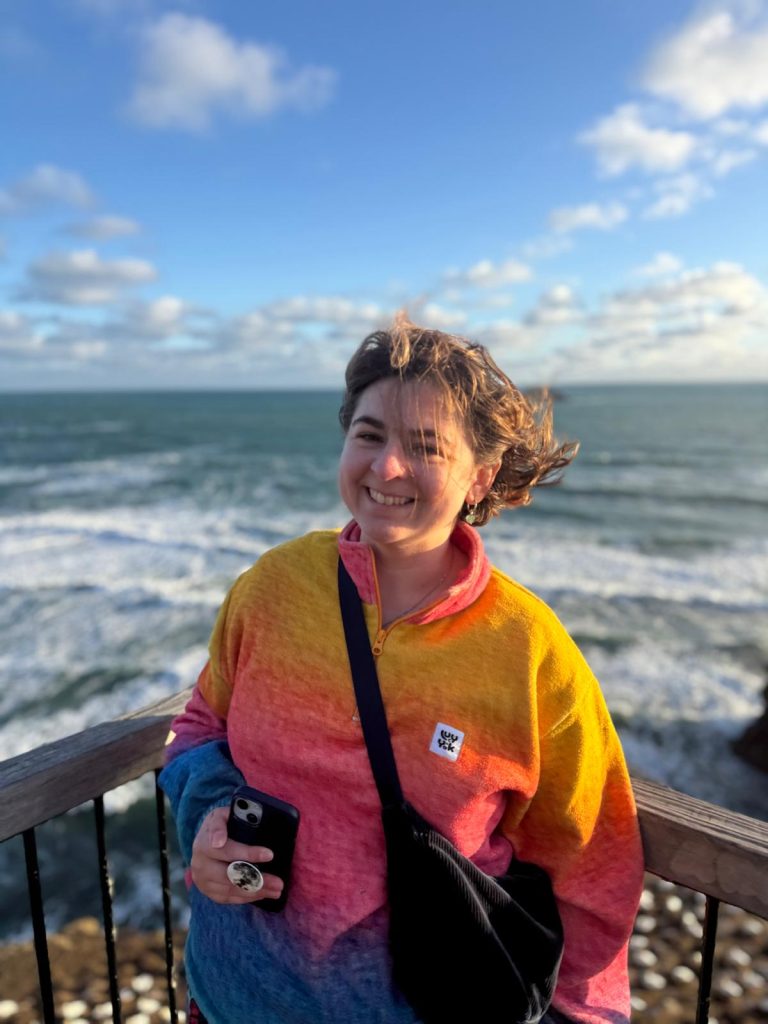
Since I became aware of my neurodivergence in young adulthood, there have been few occasions where I have not needed to advocate for disability justice. I am a newly confirmed sociology Doctoral Candidate in Aotearoa New Zealand, researching how neurodivergence and the ideal of normal are (re)produced through the neoliberal and settler-colonial university. My research uses a Critical Disability/Neurodivergence Studies lens. I am also a Research Assistant on an accessible buildings project, a Graduate Teaching Assistant for an intro to sociology course, and a Teacher Aide for a correspondence school.
Expand to read the remainder of Nyika’s statement
Before my PhD I lived in the UK and worked as Student Culture and Inclusion Training Officer at a university, where I was also chair of the Staff and PGR Neurodiversity Network. Through both roles, I delivered equity training on disability and/or neurodiversity justice, aiming to move people’s thinking away from the traditional paradigms of pathologisation and deficit.
It took me a while to begin my PhD due to my undiagnosed neurodivergence. I was diagnosed with dyspraxia in my early 20s, and with ADHD at 32. Between these, I unsuccessfully sought an autism diagnosis, being told that whilst I had “traits”, the fact I had a job and a relationship precluded a full diagnosis. This means that I have a lengthy work history, having worked in education as a Lead Practitioner in Autism, transforming a social skills curriculum to one based in self-advocacy, as a playworker for the UK’s first Inclusive Play Centre pilots, and as a Personal Care Assistant in a school for children with “Profound and Multiple Learning Disabilities.”
As Chair of a Staff and PGR Neurodiversity Network I coordinated meetings, discussions and events for neurodivergent colleagues, working with a small team of fellow board members. Access Intimacy was always our first consideration in organisation: events were planned to anticipate the needs of members through principles of both universal design and our knowledge of good neurodiversity praxis. As training is my specialism, I also delivered several workshops on neuroinclusive working for non-member colleagues.
I have a long history of voluntary work, most notably with the Scout Association, where I spent several years as a Cub Scout leader prior to emigrating. In this role, I organised the programme, “managed” a small team of co-leaders, ran meetings, and also assisted with fundraising, events, and camps. This has been an invaluable experience for my academic life, where I am in the process of setting up the university’s first Critical Disability Studies Reading Group.
Edi McGurk (they/them)
I am currently conducting research at the Royal College of Art (RCA) in London as part of the interdisciplinary MRes programme, focusing on how crip and trans people build worlds through their creative practice. My work sits at the intersection of creative practice, queer studies and disability studies.
Expand to read the remainder of Edi’s statement
I come from an alternative art school background, I was part of the 2022-2024 cohort on The Other MA, an artist-led postgraduate programme in Essex. I played a key role in shaping the organisation’s approach to access and disability and was commissioned to write about this for the organisation’s book ‘How to Set Up an Art School’.
I have been involved in numerous parts of the disability justice movement in the UK. Within my trade union I was previously the Disability Officer and supported disabled workers with their cases and training union members on disability rights. I was a founding member and leader of the Disability Justice group as part of The World Transformed, a radical arts and politics festival. I worked with other disabled attendees and volunteers to make changes within the festival and advocate for our needs.
I am part of the Disability Consultancy for Creative Change, a consultancy focused on changing understanding and approaches to disability within the arts. I was commissioned as part of this to do a research residency with UK-based arts organisation Metal, helping them adapt their approach to organisational structure to have more disability informed operations that supported their artists and employees alike.
I am regularly commissioned to deliver workshops and programmes with a disability focus, especially in an artistic context with people who experience marginalisation within the arts. I have run workshops on Access Riders for Metal, a UK-based arts organisation, protest banner workshops with young disabled people at Focal Point Gallery, and storytelling workshops with the Advocacy Academy.
I was the Co-Chair of the Board of Trustees of Creative Opps from 2022-2025. Creative Opps is a youth-led, disabled-led charity based in the UK supporting young people who face barriers to creative careers. I managed the CEO and co-led the organisation during a period of transition, expanding the board and staff to enable a more sustainable future.
I have vast experience running events and programmes. I ran a youth programme in Essex with young people with various needs who were engaging in creative work for the first time in 2022, I supported them with training and mentorship to run their own events and workshops within their communities. I have worked with a number of UK-based activist and campaigning organisations, running conferences and festivals as part of this work including online-only delivery. I am a confident and experience facilitator and designer of programmes and engagement.
I hope to continue to ensure the breadth of experiences of disability are reflected in the work of SDS. I also hope to establish SDS as a network of significance amongst more postgraduate students, especially those who face precarity in their life as a student and could benefit from the network, resource and support of a global community like SDS.
Salman Khan
[No Photo]
I am currently pursuing my PhD at the Faculty of Law, University of Delhi, where my research focuses on the reproductive rights of women with disabilities from a socio-legal perspective. My academic work engages with questions of autonomy, legal capacity, dignity, and disability justice within international and constitutional law.
Expand to read the remainder of Salman’s statement
As a wheelchair user and first-generation scholar, my engagement with disability studies is shaped both by academic inquiry and lived experience. I come from a modest socio-economic background and have largely continued my education through scholarships and community support. These experiences have deeply informed my understanding of structural exclusion, accessibility, and social justice.
Alongside research, I have remained connected with disability advocacy and community engagement through discussions on accessibility, inclusion, and rights-based approaches toward disability. I am particularly interested in strengthening Global South perspectives within disability discourse and contributing toward more inclusive and intersectional conversations in disability studies.
My experience with nonprofit and community engagement has primarily emerged through academic support networks, disability advocacy spaces, and collaborations with community-based initiatives. Throughout my educational journey, I have remained connected with organizations and individuals working toward inclusion and accessibility for persons with disabilities.
I have participated in academic discussions, awareness initiatives, and research-based engagement concerning disability rights, accessibility, and socio-legal inclusion. As a research scholar, I have also developed experience in conference participation, academic coordination, collaborative work, and public engagement through legal and policy discussions.
While my experience in formal nonprofit administration and fundraising is still developing, I am committed to contributing actively through research, communication, collaboration, and disability-centered advocacy. I am eager to learn from experienced members of the Society for Disability Studies and contribute meaningfully to its academic and community initiatives.
If elected to the SDS Board, I hope to contribute toward strengthening intersectional and Global South perspectives within disability studies. Much of my research focuses on how disability intersects with gender, reproductive autonomy, legal capacity, and socio-economic marginalization, particularly in contexts that are often underrepresented in mainstream disability discourse.
I would also like to support conversations around accessibility, inclusion of disabled scholars from marginalized backgrounds, and greater engagement with students and early-career researchers. As someone whose academic journey has been shaped by lived experience, scholarship support, and community resilience, I believe disability studies should remain deeply connected to questions of dignity, participation, and social justice.
I hope to contribute to SDS as both a scholar and community-oriented participant committed to inclusive and critical disability discourse.
Morgan Gray (they/them)
I am a disabled and chronically ill doctoral student researching at the intersections of disability justice, technology, and health information behavior. As a doctoral student at the University of Michigan, I am a member of the Health Justice Informatics Lab. My research explores how emerging technologies impact the ways disabled and chronically ill individuals navigate health information, and how that impacts our health outcomes. I am passionate about disability advocacy and disability justice – my earlier graduate level research specifically focused on meeting information needs of endometriosis patients, and advocacy for those groups. I have previously moderated social media illness support groups, and guided and directed friends and acquaintances through illness transitions. I am an outspoken advocate for health, information, and media literacy.
Expand to read the remainder of Morgan’s statement
I have worked with nonprofits in the past, including music camps and instrument donation charities. As a former stand-up comedian, I ran a small production company and donated proceeds from each of our shows to charities. I was heavily involved in event planning, promotion, and advertising, including securing venues, talent, and organizing payment.
As a member of the SDS Board, I want to apply my experience in academia, industry, and as a non-profit volunteer to help further the mission and goals of the Society for Disability Studies. I have experience as an interdisciplinary scholar, as I completed my M.S in Library and Information Science in 2021 at the University of Illinois, Urbana-Champaign in 2021. I am continuing my studies at the University of Michigan School of Information, focusing on the intersection of disability, health information, and technology. My work as an interdisciplinary scholar has honed my skills working with academics from all corners of academia. As a member of the board, I would look forward to collaboration, in the spirit of cross-movement and cross-disability solidarity.
My work experience would also be helpful. I took time between undergrad and grad school to work, and worked in insurance, logistics, and corporate libraries. This may seem unrelated, but working in these industries made me an excellent communicator and collaborater. The organizational skills I rely on to succeed in academia were forged in my early professional career. I have led meetings, created agendas, and run projects from start to finish as a one-person department. This makes me very well suited to serve as either a graduate representative or as secretary. As a trained librarian, I am exceptional at organization and knowledge management. These skills are essential for organizing meetings, and taking meticulous notes.
I also have experience planning, running, and volunteering at events. Prior to 2020, I produced and booked stand-up comedy shows and donated portions of their proceeds to different charities. I also assisted with event planning for my music fraternity, Sigma Alpha Iota, in undergrad, and served as the Editor on their executive board.
My academic, professional, and volunteer experience translates well to the responsibilities. Ultimately, as a member of the SDS board, I hope to translate this experience to furthering the mission of SDS – amplifying disability scholarship and activism through assisting with the day-to-day operations. I am committed to the principles of disability justice, and want to create a better world for disabled people.
Seon Shim (she/her)
My work sits at the intersection of critical disability studies, disability media, and anthropology, with a focus on neurodivergence, kinship, and care in Korean and transnational contexts. As a filmmaker, I directed The Cat that Lives in Your Dreams, a documentary about a Korean autistic artist and her family that has screened widely and been supported by the AXS Film Fund and multiple festival awards; this project has involved sustained collaboration with disabled artists around access, authorship, and consent. In my academic life, I have been recognized with the the American Anthropological Association’s Disability Research Interest Group (DRIG) Disability Anthropology Essay Prize and serve on the Steering Committee of DRIG, where I help organize programming, mentoring, and fundraising to support disabled anthropologists and graduate students. I also contribute to disability arts and scholarship through translation work for artists with disabilities in Korea and curatorial and exhibition review for the Society for Disability Studies. Across these roles, I understand disability not only as an analytical framework but as a ground for community-building, solidarity, and disability justice–oriented practice within and beyond the academy.
Expand to read the remainder of Seon’s statement
My nonprofit and organizational leadership experience spans scholarly associations, festivals, and community organizations. As a Steering Committee Member of DRIG within the Society of Medical Anthropology (SMA) group, I participate in collective decision-making, help organize an “encore presentation” speaker series, coordinate mentoring activities, and contribute to fundraising for a dissertation fellowship for disabled ethnographers. Currently I am instigating fundraising tactics with committee members for developing the group’s website and newsletter. Within the Society for Disability Studies, I serve on the Curatorial / Exhibition Award panel, reviewing and ranking disability-focused exhibitions and projects and deliberating collectively (scheduled during August) to select recipients. Beyond formal associations, I have supported programming and outreach in roles such as Executive Assistant at the nonprofit Give Beauty Wings, where I identified fundraising opportunities and helped coordinate campaign events, and as a pre-screening committee member for the Margaret Mead Festival, where I evaluated 60+ films to shape the festival program. These experiences have trained me in collaborative governance, transparent evaluation, and balancing logistical constraints with disability justice commitments in nonprofit and scholarly spaces.
On the SDS Board, I hope to support and expand disability-led infrastructures that make it easier for disabled, BIPOC, queer, im/migrant, and early-career scholars and artists to thrive in the field. I am especially interested in strengthening connections between Disability Studies Quarterly, SDS programming, and disability arts and media communities, so that scholarship, creative practice, and activism inform one another more directly. Building on my experience with mentoring initiatives and award committees, I would like to help develop sustainable structures—such as fellowships, mentorship programs, and curated multimodal spaces—that redistribute resources and visibility toward those most marginalized within disability communities. More broadly, I aim to bring a transnational and media-centered perspective to SDS governance, foregrounding Korean and wider Asian disability contexts while working collaboratively to make SDS’s events, publications, and decision-making processes more accessible, transparent, and accountable to disabled members.
Andrea White (she/her)
For the last twenty five years I have been involved in disability community as an activist, researcher, and student. I identify as a psychiatric survivor but am committed to principles of cross-disability justice. I have organized a fundraiser for the patient built wall at the Centre for Addiction and Mental Health in Toronto and a two day academic conference at UVic (Mad Pasts, Mad Presence. For five years I organized Mad Pride related events in St Johns’, NL. My doctoral work looks at identity, memory and community among the membership of the Vancouver Mental Patients’ Association.
Expand to read the remainder of Andrea’s statement
My previous experience includes:
– Words on the Wall fundraiser for the Psychiatric Survivor Archives, Toronto
– Lead Organizer, Mad Pasts, Mad Presence at UVic – April 2026
– Lead Organizer, Mad Pride on the Rock (2020-2025)
– Board Member Independent Living Resource Centre, St John’s NL
– Board Member, Community Coalition for Mental Health, St John’s, NL
– Board Member, Canadian Mental Health Association, NL Chapter
As a Graduate Student Representative, I will:
* Provide a voice to graduate students with disabilities
* Support new and emerging scholars with publication of research
* Support the organization of a conference/events
Laura Hollaway (She/Her)
My research and publications emphasize dignity, quality of life, intersectionality, and social inclusion, including recent work on Inclusive Academia: Intersectionality of Disability, Gender and Caste.
My experience in nonprofit leadership and community engagement has primarily been connected to education, disability advocacy, autism support, and professional collaboration within school and university communities. Through my doctoral studies, faculty involvement, and work within educational settings, I have participated in collaborative committees, professional learning initiatives, and outreach efforts focused on improving supports and outcomes for students with disabilities and their families.
Expand to read the remainder of Laura’s statement
I have experience coordinating with educators, administrators, and community stakeholders to support inclusive practices, research participation, and educational programming. This has included involvement in professional development efforts, educational seminars, and community engagement activities centered on autism, neurodiversity, and evidence-based practices. My work has also required strong collaboration, communication, and organizational skills when working with multidisciplinary teams and supporting research and program initiatives.
In addition, my role within higher education has allowed me to contribute to mentoring, advocacy, and professional engagement opportunities that support future educators and professionals entering the field. I value service-oriented leadership and believe strongly in building collaborative relationships that strengthen community access, inclusion, and support for individuals with disabilities.
If elected to the SDS Board, I hope to contribute a perspective grounded in education, autism advocacy, neurodiversity-affirming practices, and community collaboration. One of my primary goals would be to help strengthen connections between disability scholarship, educational practice, and the lived experiences of disabled individuals and families. I believe there is tremendous value in creating spaces where educators, researchers, advocates, students, and community members can work together to promote accessibility, inclusion, and meaningful systemic change.
I would also like to support efforts that increase engagement and accessibility for emerging scholars, students, and professionals entering disability-related fields, particularly those whose work intersects with education and neurodiversity. As someone actively involved in both higher education and public education settings, I hope to help bridge conversations between academic research and real-world implementation in schools and communities.
Additionally, I want to continue learning from and collaborating with individuals across the broader disability community while advocating for approaches that center dignity, autonomy, representation, and equity. I value interdisciplinary perspectives and believe that strong leadership comes from listening, collaboration, and a commitment to ongoing growth and reflection.
Hyemin Kwak
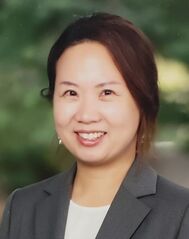
I am a BCBA, special educator, and doctoral student in Disability Studies with more than 20 years of experience working alongside autistic individuals and people with developmental disabilities in both the United States and South Korea. My work has increasingly moved from a traditional medical and behavioral framework toward Critical Disability Studies, neurodiversity, and disability justice perspectives that center dignity, autonomy, communication rights, and self-determination.
Professionally, I have worked in public schools, inclusive classrooms, autism programs, community-based services, and teacher training settings. Much of my leadership has focused on helping educators and service providers rethink disability beyond deficit-based models and toward more relational, rights-based, and inclusive approaches. I have also developed trainings and consultation programs related to inclusive education, Positive Behavior Support, autism-centered practices, and assent-based behavioral support.
Expand to read the remainder of Hyemin’s statement
My research and advocacy interests focus on the intersection of disability studies, inclusive education, and autism support. In particular, I examine how ableism, normalization, institutional power, and behavioral compliance practices shape the lives of disabled people. My recent work includes research on communication rights, institutional oppression, disability identity, and the experiences of autistic individuals within educational and therapeutic systems. I am especially committed to amplifying perspectives that have historically been marginalized within professional and academic spaces, including non-speaking autistic people and individuals labeled with “challenging behaviors.”
While I do not claim to speak for all disabled people, I see my role as building bridges between disability scholarship, professional practice, families, educators, and the broader disability community. I believe disability justice requires not only policy change, but also deep cultural shifts in how society understands autonomy, interdependence, communication, and human value.
Over the past two decades, I have participated in and helped coordinate professional development trainings, parent education workshops, social skills programs, inclusive education initiatives, and interdisciplinary consultation teams. I have also presented and shared work in academic and professional settings related to autism, Positive Behavior Support, inclusive education, disability studies, and neurodiversity. These experiences have strengthened my ability to collaborate across diverse stakeholder groups, facilitate dialogue, and support mission-driven organizational work.
If elected Secretary, I would work to ensure that organizational processes, records, and communications are not only efficient but also accessible and inclusive. I hope to help strengthen SDS’s institutional continuity while supporting meaningful engagement among members across diverse geographic, cultural, and disciplinary contexts. Ultimately, I see the role of Secretary as more than an administrative position. It is an opportunity to help steward the collective knowledge, relationships, and values that sustain SDS, while ensuring that accessibility, disability justice, and global perspectives remain central to the organization’s ongoing work.